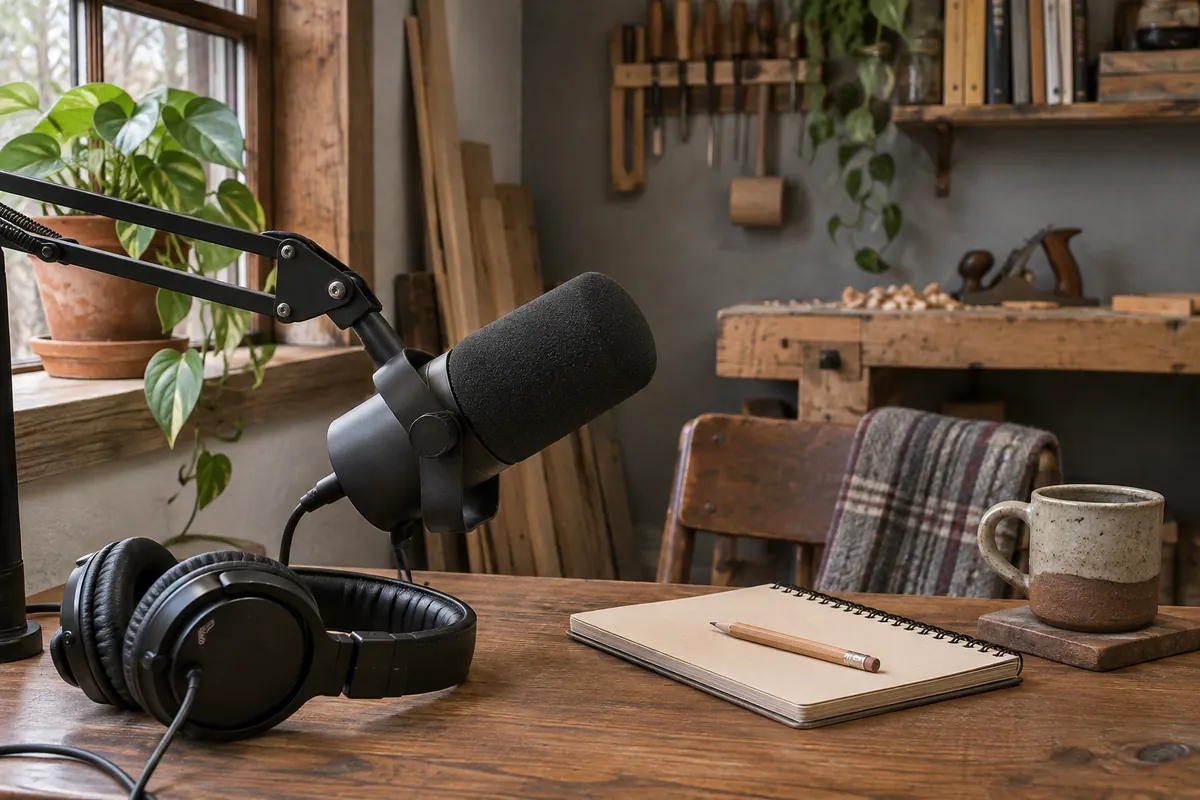
The first money spent on a podcast often goes towards a microphone that looks reassuringly professional. Yet the early difficulty might be finding ten minutes of quiet, choosing a subject you can return to, or remembering which file contains the good take. None of these problems requires an elaborate studio. It helps to make a small finished programme before deciding where a limited budget ought to go.
Choose a repeatable subject
Pick an idea that can support a dozen conversations, rather than a single interesting anecdote. A narrow audience is useful when deciding which questions belong in the first episode.
Write twelve possible episode titles and circle those you can produce without arranging a guest. There is an advantage to doing this before investing more time in the rest of the work. It exposes assumptions that can otherwise survive until the final stage, where they are more expensive or awkward to correct. Allow enough time to examine the result in the same circumstances where it will actually be used. A useful premise makes those twelve titles visibly related while allowing different approaches. Keep the first version nearby so that a later change can be judged against it rather than against an imperfect memory.
Make a basic recording corner
A quiet, soft-furnished part of a room beats an expensive microphone in a bare kitchen. Put the recording position away from windows, refrigerators and ventilation fans.
Speak into the setup at several times of day and keep the cleanest thirty-second sample. Use enough material to expose the ordinary variations you expect to encounter. A few seconds or a single particularly easy example can conceal a weakness that becomes obvious when attention moves elsewhere. When a change seems helpful, consider whether the same approach remains manageable under normal conditions. Listen for room reflections when your voice stops. A method that requires constant correction is unlikely to be a dependable part of a recurring routine. Prefer the arrangement that leaves you free to concentrate on the actual work.
Use the equipment you can test
A single microphone, headphones and a reliable recording device are enough for many solo formats. Extra inputs and controls can be left for a later stage.
Pay careful attention to the reference used for the comparison. Record a short passage, check that the file opens, then make a second recording at the same distance. The original condition gives this exercise meaning; if it is lost, the result can become difficult to interpret. Work with a temporary copy or a small example wherever that is appropriate. Both recordings should have similar tone and level. Keep track of the differences that truly matter and distinguish them from incidental details. The point is to make a reliable choice, not to collect as many observations as possible without knowing how they affect the finished work.
There is a closer look at a related question in What Makes Podcast Show Notes Useful.
Plan a short pilot
An introduction, a concrete story and a useful closing idea make a manageable first programme. The pilot should reveal the work required between the idea and the finished audio.
Aim for eight to twelve minutes, allowing room for natural pauses. Try not to judge the success of the decision solely by how easy it is to carry out. Some seemingly convenient choices require substantial reworking later, while a little preparation may eliminate a recurring difficulty. Consider the next person or the next stage that will depend on this result. Note which parts were difficult to read aloud or took repeated takes. A useful way to decide is to imagine having to return to the work after several weeks. Leave enough context to make that return straightforward.
Make a manageable production budget
Allow some of the money for cables, a stable stand and storage. The inexpensive item that removes a recurring fault can be more valuable than a conspicuous piece of gear.
Set aside a fixed amount for problems discovered during the pilot. There are often several plausible ways to approach the same issue. The useful test is one that distinguishes their practical effects rather than comparing an ideal description of each method. A purchase needs a clear reason tied to an audible fault or a repeated task. Keep the comparison honest by using similar starting conditions and avoiding a different standard for the favoured option. If the difference is too small to matter, consider keeping the simpler method for now. More demanding situations can provide additional evidence when they arise.
Decide how to publish
A downloadable audio file, its episode title, descriptive notes and a recurring release schedule are the essential deliverables. Decide how you will maintain access to old files.
Try to separate the parts that require precise judgment from those that can reasonably vary. Export a draft episode and create its notes before attempting an elaborate launch. This keeps attention available for the places where a small mistake has a significant consequence. Check whether the title and opening line tell a new listener what to expect. If a detail does not affect the intended result but takes an unreasonable amount of time to refine, reconsider whether it deserves further attention. A reliable outcome does not require every intermediate choice to be identical. It does require a clear reason for the decisions that matter.
Further reading in the journal: Turning One Interview into Several Useful Pieces of Content.
Keep copies of the session
The raw recording should survive mistakes made in the edit. Keeping separate original, session and delivery folders prevents repeated recompression or accidental replacement.
There is a difference between remembering a method and being able to repeat it under ordinary conditions. Copy the original files before editing or trimming. Record the details that proved necessary and resist turning every observation into a complicated procedure. Open the backup to confirm it is readable and has the expected duration. If something does not work predictably, identify the part of the arrangement that is most likely responsible and test it directly. Useful conventions develop from repeated work, and they need not be fixed forever. Change them when real examples show a reason to do so.
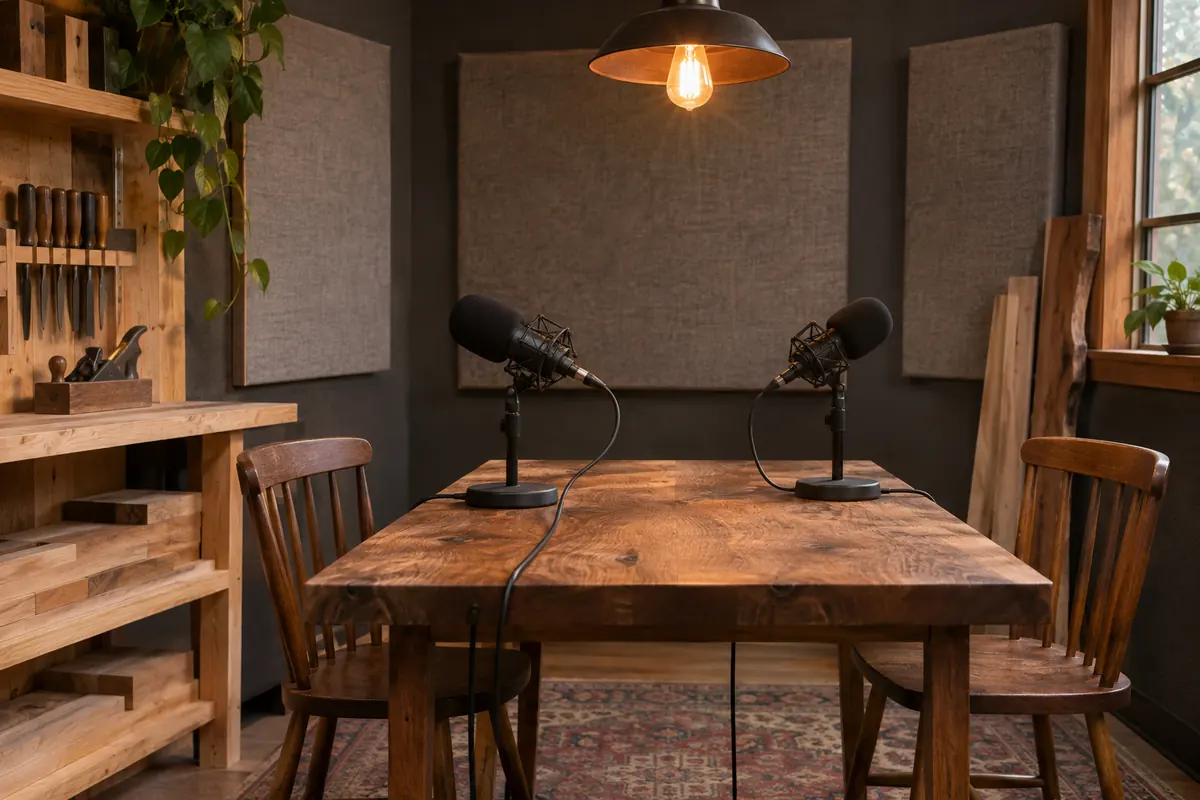
Set a sustainable pace
A reliable monthly programme can be a stronger initial commitment than a weekly format that collapses after a few episodes. Actual editing time matters more than enthusiasm on launch day.
Track the hours for the pilot and include preparation, recording and delivery. The final comparison is an opportunity to see whether earlier expectations were reasonable. A satisfactory result may differ from the first idea in a way that reveals an important practical consideration. Choose a release interval that leaves room for other work and ordinary interruptions. Notice which arrangement was easier to maintain and which details deserved closer attention. Preserve only the notes and references that will be useful for future decisions. The next attempt can then begin with a better question instead of a completely new collection of guesses.
Before moving on
The pilot is your shopping list. If it sounds clear but takes six hours to prepare, the next improvement may be a simpler outline rather than another microphone. Keep enough of the original setup to make an honest comparison.