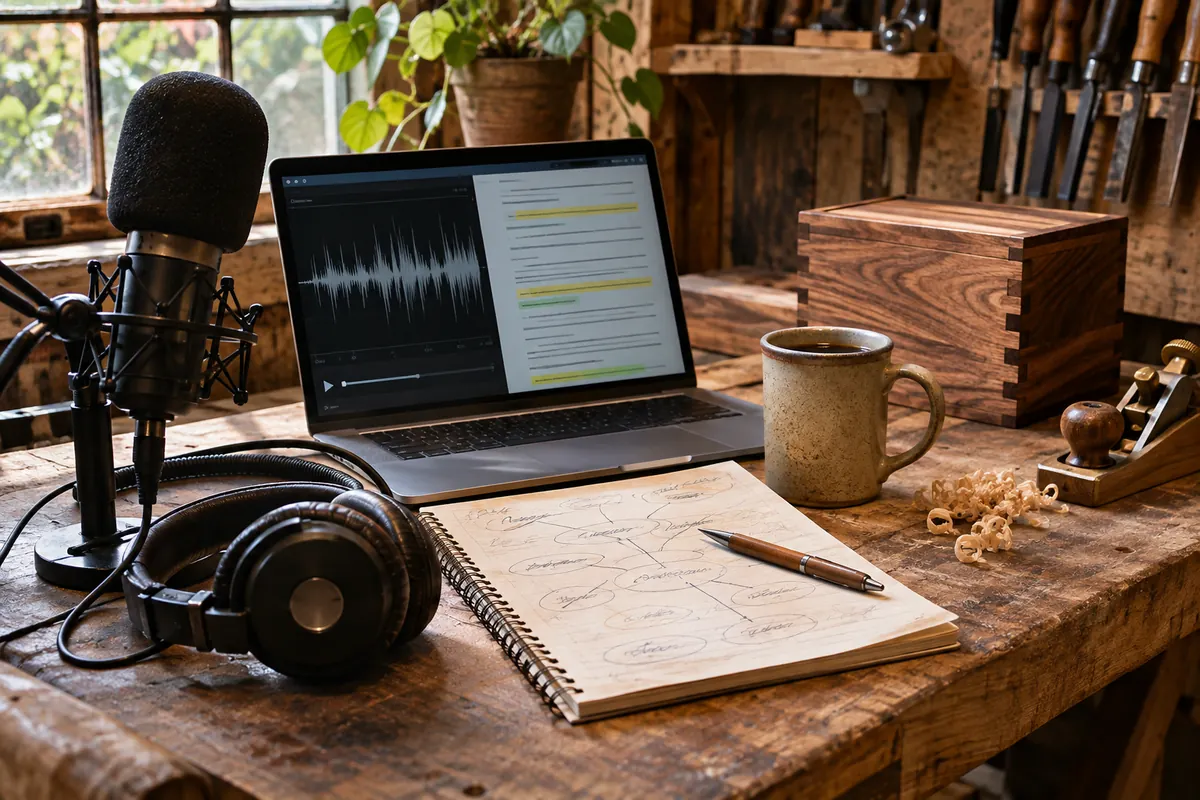
A transcript often preserves the best evidence of a question that was only partly explored during a conversation. An interesting term may have been mentioned without explanation, or a guest may have offered an example that deserves a discussion of its own. The original passage provides a useful starting point, but it needs to be understood before becoming a new editorial subject.
Start with the existing discussion
A transcript preserves details that are easy to forget after an edit. It can expose an interesting example that received only a few sentences in the original conversation.
For a useful first comparison, use an ordinary situation rather than an unusually favourable one. Read several older transcripts with a notebook for unresolved points. The result should be representative of the work you normally intend to do, not a demonstration designed only to make the method look successful. Write down anything you are obliged to change during the trial, especially when a different person or material is involved. Record the episode reference and precise passage behind each idea. That observation gives you a starting measure for the remaining decisions, even if the initial attempt reveals a problem that needs another pass.
Separate questions from established answers
A guest may speculate, remember uncertainly or suggest a subject for later. Turning the remark into a definitive article can distort the original context.
Distinguish verified descriptions, personal opinions and unanswered questions in the notes. Use enough material to expose the ordinary variations you expect to encounter. A few seconds or a single particularly easy example can conceal a weakness that becomes obvious when attention moves elsewhere. When a change seems helpful, consider whether the same approach remains manageable under normal conditions. Frame future material according to the strength of the source. A method that requires constant correction is unlikely to be a dependable part of a recurring routine. Prefer the arrangement that leaves you free to concentrate on the actual work.
Look for repeated practical problems
Different speakers may describe similar difficulties using different words. Such repetition can point to a subject that needs a clearer explanation.
Group remarks by the underlying task rather than exact vocabulary. Consider what would make someone else interpret this result differently. Is something obvious to you only because you know what happened just before, or because you have spent time with the original material? Look briefly at the problem from the perspective of someone encountering it for the first time. Collect examples without assuming the recurrence proves a universal rule. Add clarification if necessary, but avoid inventing a complication where none exists. The most helpful change is the one that addresses a specific difficulty without adding another.
Further reading in the journal: How to Transcribe a Podcast by Hand.
Notice the overlooked beginner
An experienced speaker may skip basic explanations that a newcomer needs. The transcript helps identify terms or steps that were never clarified during the conversation.
Give yourself a little room to adjust without losing sight of the purpose of the exercise. Highlight assumptions that require prior knowledge. An arrangement that is almost right may need a small practical change rather than a full redesign. Develop a new outline focused on the missing context rather than retelling the whole episode. If possible, compare the result at a later stage, when you can assess it in relation to the other work. Keep the parts that already perform well. Repeated changes to a satisfactory detail consume time and may introduce problems that were not present originally.
Create a focused follow-up question
A broad collection of promising remarks can produce a confused programme. Choose one central question and use related material as context.
Write a short proposed episode description and list relevant passages. There are often several plausible ways to approach the same issue. The useful test is one that distinguishes their practical effects rather than comparing an ideal description of each method. Remove points that do not help address the main question. Keep the comparison honest by using similar starting conditions and avoiding a different standard for the favoured option. If the difference is too small to matter, consider keeping the simpler method for now. More demanding situations can provide additional evidence when they arise.
Check permission and attribution
A previous recording may have conditions on how quotations or sensitive material can be reused. A transcript is not permission to publish every extracted sentence independently.
A useful rule at this stage is to protect the part of the work that has already been established. Review the conditions agreed for the original conversation. This gives you a way to introduce changes without undoing earlier progress. Use only accurate, properly contextualized material that can be reused appropriately. Keep details that explain the relationship between the current choice and preceding decisions, especially when a result depends on an earlier version. Think about how you would resolve an unexpected problem if it appeared the following day. A record of the relevant circumstances often saves repeated work.
For more on a nearby subject, read Making a Good Podcast Article from a Recording.
Choose the right next format
An overlooked idea might support a brief solo explanation, an essay or a new interview. The format depends on whether additional knowledge or firsthand experience is needed.
Identify what the existing transcript provides and what remains missing. Consider how this result will appear to someone who did not take part in producing it. They will not have the same knowledge of discarded attempts, temporary adjustments and other circumstances. Plan a follow-up that answers the actual gap. A brief independent check can reveal a problem that has become familiar enough for you to overlook. If the check suggests a substantial change, preserve the version you already have and make the correction deliberately. Avoid creating unrelated revisions while trying to resolve one recognizable difficulty.
Maintain a useful idea index
A growing collection of notes can become difficult to search. Stable episode references and topic labels allow useful passages to be found later.
Before moving on, establish whether the method can be repeated without reconstructing every decision. Create a small index with the question, relevant passage and planned format. Make the remaining checks using the actual output rather than relying entirely on the appearance of the working version. Review it occasionally and discard ideas that no longer fit. If the work needs a further change, keep the reference that shows why. Otherwise, write down the useful choices and put them into practice during the next comparable task. This turns the effort of the first experiment into material that continues to be useful.
Before moving on
Keep a modest list of unresolved questions with their actual source passages attached. When a new idea moves into production, identify the extra evidence or explanation it needs rather than relying only on a remembered remark.