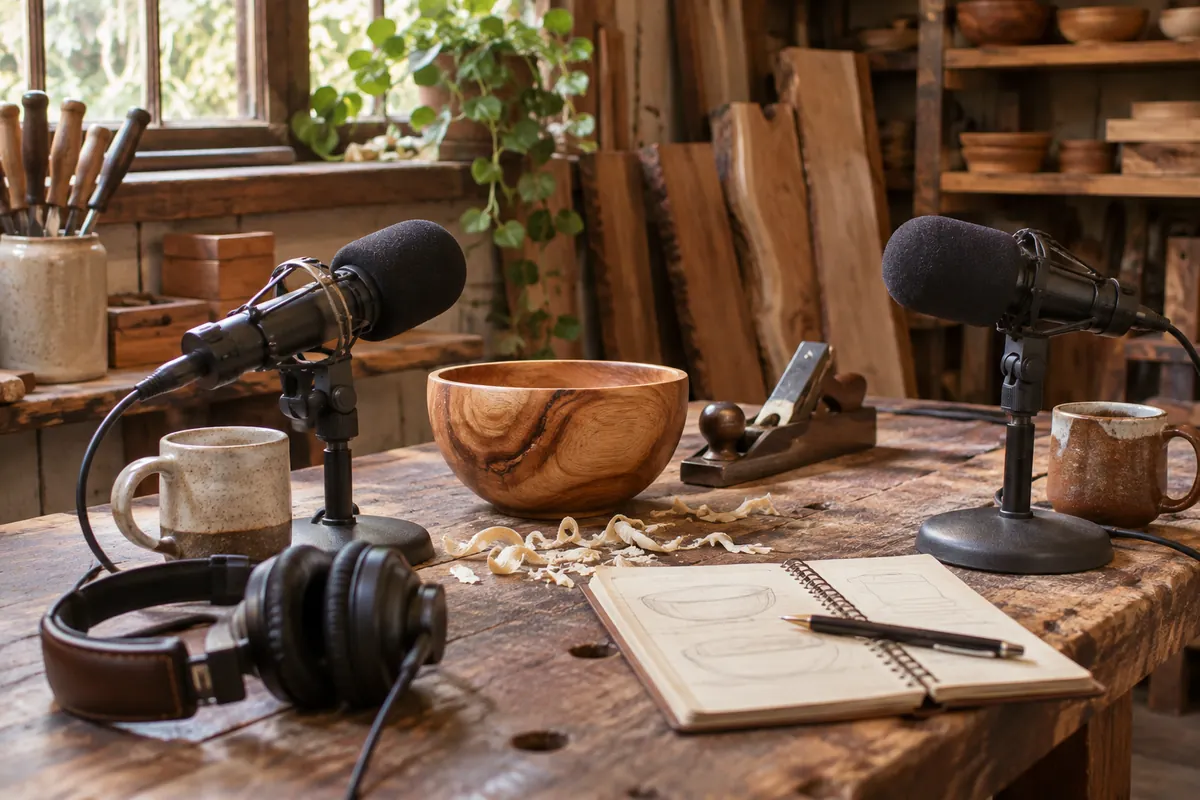
A maker's workshop may be full of objects that represent days of decisions. Asking about one of them can be a more useful beginning than asking for a summary of an entire working life. A specific object gives both people something to describe, including dimensions, materials, compromises and mistakes that a more general conversation might never reach.
Start with an object
A maker's work can feel abstract in conversation until there is a specific item to discuss. An object offers a route into decisions about materials, purpose and technique.
Ask the maker to describe something they have produced recently. There is an advantage to doing this before investing more time in the rest of the work. It exposes assumptions that can otherwise survive until the final stage, where they are more expensive or awkward to correct. Allow enough time to examine the result in the same circumstances where it will actually be used. Follow the description with questions about how it differs from their earlier work. Keep the first version nearby so that a later change can be judged against it rather than against an imperfect memory.
Ask about the sequence
A finished object conceals the steps and decisions that created it. Listeners may be interested in the order of operations as much as the final appearance.
Do the small preliminary exercise before getting absorbed in the larger task. Ask what happened first, what took the longest and which decision could not be reversed. Think about what might make it fail outside this particular example, such as a change in the available time, the material or the person doing the work. Encourage a clear explanation without demanding that the guest reproduce a complete tutorial. Where the method is promising but the result remains inconsistent, simplify the arrangement or examine the source of the discrepancy. A method you understand well is generally easier to adapt than one that happens to work once.
Explore mistakes and changes
A maker may remember an unsuccessful attempt more clearly than a routine success. Such stories can reveal the material or process more accurately than polished descriptions.
Pay careful attention to the reference used for the comparison. Ask for a specific point where a project did not go as expected. The original condition gives this exercise meaning; if it is lost, the result can become difficult to interpret. Work with a temporary copy or a small example wherever that is appropriate. Find out what the guest noticed and what changed in the next attempt. Keep track of the differences that truly matter and distinguish them from incidental details. The point is to make a reliable choice, not to collect as many observations as possible without knowing how they affect the finished work.
Further reading in the journal: Writing Interview Questions That Invite Good Stories.
Translate visual details into sound
A podcast listener cannot see a join, tool mark or unusual surface. A brief spoken description can establish the scale and shape of an object.
Ask the maker to explain what someone holding the object would notice. Try not to judge the success of the decision solely by how easy it is to carry out. Some seemingly convenient choices require substantial reworking later, while a little preparation may eliminate a recurring difficulty. Consider the next person or the next stage that will depend on this result. Offer a simple description when necessary and let the maker correct it. A useful way to decide is to imagine having to return to the work after several weeks. Leave enough context to make that return straightforward.
Respect the working environment
A shop can contain dangerous equipment, dust and ongoing obligations. The interview should take place in an appropriate inactive space without distracting anyone operating tools.
Agree on the timing and choose a clean recording position before setting up. There are often several plausible ways to approach the same issue. The useful test is one that distinguishes their practical effects rather than comparing an ideal description of each method. Ensure that audio gear and cables do not interfere with normal access. Keep the comparison honest by using similar starting conditions and avoiding a different standard for the favoured option. If the difference is too small to matter, consider keeping the simpler method for now. More demanding situations can provide additional evidence when they arise.
Distinguish experience from instruction
A technique that works for an experienced maker may require training, specialized tools or supervision. The guest's account is a story of their practice, not automatically advice for a novice.
A useful rule at this stage is to protect the part of the work that has already been established. Ask what preparation or experience was important to their approach. This gives you a way to introduce changes without undoing earlier progress. Clarify any conditions under which the technique would not be applicable. Keep details that explain the relationship between the current choice and preceding decisions, especially when a result depends on an earlier version. Think about how you would resolve an unexpected problem if it appeared the following day. A record of the relevant circumstances often saves repeated work.
There is a closer look at a related question in Building an Archive of Craft Interviews and Lessons.
Make room for quiet detail
A good conversation about craft is not necessarily full of extraordinary accomplishments. Ordinary routines, material selection and maintenance often reveal the character of the work.
Ask about an unremarkable task the maker performs repeatedly. Consider how this result will appear to someone who did not take part in producing it. They will not have the same knowledge of discarded attempts, temporary adjustments and other circumstances. Explore why it matters rather than seeking a dramatic conclusion. A brief independent check can reveal a problem that has become familiar enough for you to overlook. If the check suggests a substantial change, preserve the version you already have and make the correction deliberately. Avoid creating unrelated revisions while trying to resolve one recognizable difficulty.
Use the notes to preserve context
The interview can mention objects, tools and methods that a reader may want to understand later. Clear notes provide context without interrupting the recording repeatedly.
Before moving on, establish whether the method can be repeated without reconstructing every decision. Write a short list of subjects using the maker's terminology where accurate. Make the remaining checks using the actual output rather than relying entirely on the appearance of the working version. Check that the notes represent the discussion without inventing achievements or claims. If the work needs a further change, keep the reference that shows why. Otherwise, write down the useful choices and put them into practice during the next comparable task. This turns the effort of the first experiment into material that continues to be useful.
Putting the method into practice
A good account of craft stays close to what the maker experienced. Preserve the particular details and their context, and keep an understandable distinction between a story about working and instruction for someone attempting the operation.