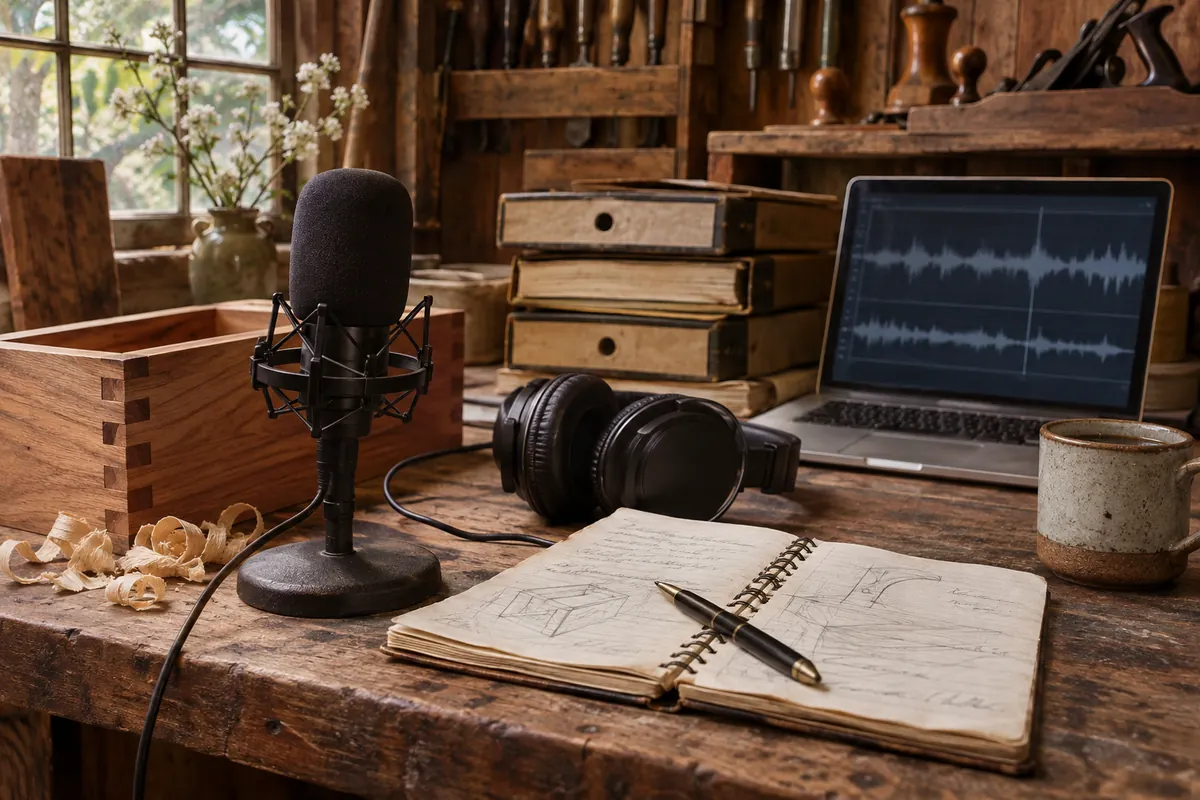
A growing collection of workshop conversations can become difficult to explore when all the pages are arranged under dates and generic episode titles. A visitor looking for a particular topic may never reach the useful material buried in the collection. An archive should preserve the source and circumstances of older recordings while making their subjects easier to discover.
Decide what the archive contains
A craft podcast may accumulate interviews, notes about individual objects and general explanations of techniques. These forms serve different purposes for someone browsing the collection.
Define the main content types and give each a recognizable place. There is an advantage to doing this before investing more time in the rest of the work. It exposes assumptions that can otherwise survive until the final stage, where they are more expensive or awkward to correct. Allow enough time to examine the result in the same circumstances where it will actually be used. A reader should be able to tell whether a page is an interview, guide or reflection. Keep the first version nearby so that a later change can be judged against it rather than against an imperfect memory.
Describe topics through concrete language
A vague title about inspiration can conceal a valuable conversation about a particular process. Descriptive titles make older material useful after its release has passed.
An informative comparison does not have to be complicated. Use the relevant object, technique, question or craft in the title and short description. Keep the surrounding conditions as similar as practical and preserve the original material when you can. Allow a little time before judging the result, because a recent change sometimes seems more successful simply because it is different. Avoid implying details or experiences that were not actually discussed. If the improvement is uncertain, a second representative example may reveal whether the issue is really addressed. This is also a good opportunity to discover which details deserve to be retained in your notes.
Keep recordings and written material connected
An interview transcript may be stored far from the original session or article. A stable project reference makes it easier to check quotations and reuse material appropriately.
Give related files an identifier and preserve the source recordings. Consider what would make someone else interpret this result differently. Is something obvious to you only because you know what happened just before, or because you have spent time with the original material? Look briefly at the problem from the perspective of someone encountering it for the first time. Verify that the article notes point to the correct material. Add clarification if necessary, but avoid inventing a complication where none exists. The most helpful change is the one that addresses a specific difficulty without adding another.
For a related part of the process, see Describing Visual Craft Processes in Audio.
Respect the conditions of older recordings
An archived interview may contain restrictions on publication or reuse. Passage of time does not remove the need to honour those conditions.
At this point, a representative example is more helpful than a vague impression about the work. Retain records of agreed uses and review them before preparing a new extract. Save any useful record of the exercise, including the original version where appropriate. Compare the results in their ordinary context instead of viewing each in isolation. Avoid assuming that permission for a complete episode includes all future uses. If a small alteration causes a new problem nearby, consider reversing it and trying a more restrained approach. A careful comparison can be completed quickly once the question has been narrowed to something specific.
Add useful subject relationships
People browsing an archive may want to move from a story about a material to a related explanation. Internal links help when the relationship is specific and relevant.
It is easy to become preoccupied with one detail while losing the original reason for addressing it. Connect material only when it shares an actual question or subject. Remember to consider how the choice affects the finished material rather than merely the intermediate result. Use descriptive link text that makes the next page's purpose clear. Where two approaches appear equally suitable, think about the effort needed to maintain each of them. There may be an advantage to the simpler one if it leaves more room to deal with unpredictable problems. Preserve the comparison so you can revisit it if circumstances change.
Distinguish history from current advice
A recording may preserve an earlier approach or a maker's opinion at a particular time. Equipment and practices may change, and older material can retain value as a record.
Keep genuine dates visible and explain substantial later corrections where appropriate. Check whether any detail depends on an arrangement that will change later. It is common to discover that a useful intermediate result becomes inaccurate when the surrounding material is rearranged or another requirement changes. Do not silently transform a personal account into universal practical guidance. Make a final comparison after those dependencies are stable. In the meantime, leave a clear indication of what still needs to be confirmed. This is more useful than treating provisional work as finished and forgetting which assumptions require another check.
For a related part of the process, see Keeping a Useful Woodworking Project Journal.
Provide a browsable structure
Dates alone are useful for returning listeners but less helpful to someone seeking a particular craft subject. Categories and a searchable index offer alternative routes.
Create a consistent subject structure and test it on several older pieces. Now compare the proposed solution with the actual needs of the finished work. A technically interesting alteration is not necessarily an editorial or practical improvement. Check that the newest material does not hide the rest of the collection. Evaluate the complete result, including the portions that were not changed, to make sure the choice did not create an unexpected difference elsewhere. If everything behaves as intended, stop adjusting it. The ability to decide that something is finished is an important part of a dependable independent workflow.
Review the archive for practical gaps
An incomplete transcript or unclear description reduces the usefulness of an otherwise valuable recording. Regular small corrections are easier than rebuilding the collection at once.
Before moving on, establish whether the method can be repeated without reconstructing every decision. Review a few older entries periodically for broken relationships, missing notes and ambiguous titles. Make the remaining checks using the actual output rather than relying entirely on the appearance of the working version. Keep the catalogue accurate and use improvements that make material easier to find. If the work needs a further change, keep the reference that shows why. Otherwise, write down the useful choices and put them into practice during the next comparable task. This turns the effort of the first experiment into material that continues to be useful.
Putting the method into practice
Choose a subject that appears in a few different parts of the archive and try finding them independently. A small improvement to titles, categories or relationships may make the existing collection more useful than adding another page.