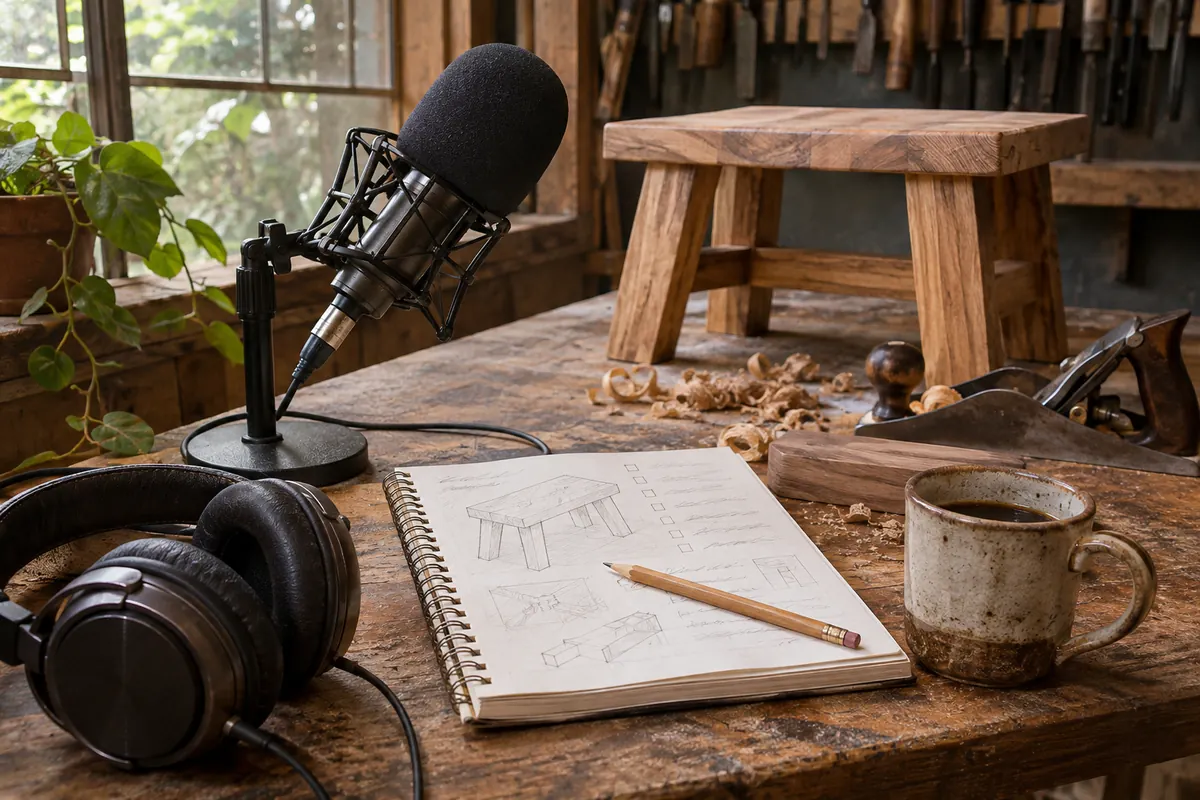
A project episode offers more than a record of a finished object. It can examine the decisions made before and during the work and the evidence that led the maker to change their plan. A brief account of one meaningful complication may be more useful than speaking through every operation, especially when the listener cannot see the piece.
Select a manageable project story
A large project can involve too many separate concerns for one programme. A modest object or a particular decision can supply a clearer episode subject.
Begin with something you can observe directly. Identify the most useful question the project raises. Keep the first attempt deliberately basic; otherwise it becomes difficult to separate a useful change from the effects of everything else that has changed at the same time. Make a short note of the starting conditions and retain it for the next attempt. Write an outline that answers that question instead of cataloguing every stage. If this is not apparent, reconsider the starting point instead of adding complexity. A workable baseline is often more informative than an elaborate arrangement made before the practical problem is understood.
Describe the intended result
A listener needs to understand what the project is for before hearing about the materials and decisions. An ordinary object can still present interesting trade-offs.
Approach this stage as a series of small decisions rather than a single correction. Explain the planned dimensions, use and important constraints in plain language. When working with more than one variable, change just the one most closely related to the issue you have noticed. A different position, arrangement or passage may introduce an unrelated effect that confuses the comparison. Make clear when a detail is a design preference rather than a requirement. Make a note of the details that had the clearest influence. This makes it possible to recreate a worthwhile change later without repeating all of the initial experimentation.
Document the actual process
Memory may compress a long period of work into a smooth sequence that never really happened. Notes made during a project help preserve the important choices.
Record observations and adjustments in a journal at appropriate stopping points. Notice what happens at the boundaries of this task, not only in the part receiving your immediate attention. A change that looks correct on its own can affect the portion that precedes or follows it. Check both relationships before taking the work further. Do not let recording or photographing interfere with safe work. If you need to make a later correction, keep enough information to understand why the earlier choice was made. Clear records prevent confusion between a deliberate decision and an accidental difference that appeared halfway through.
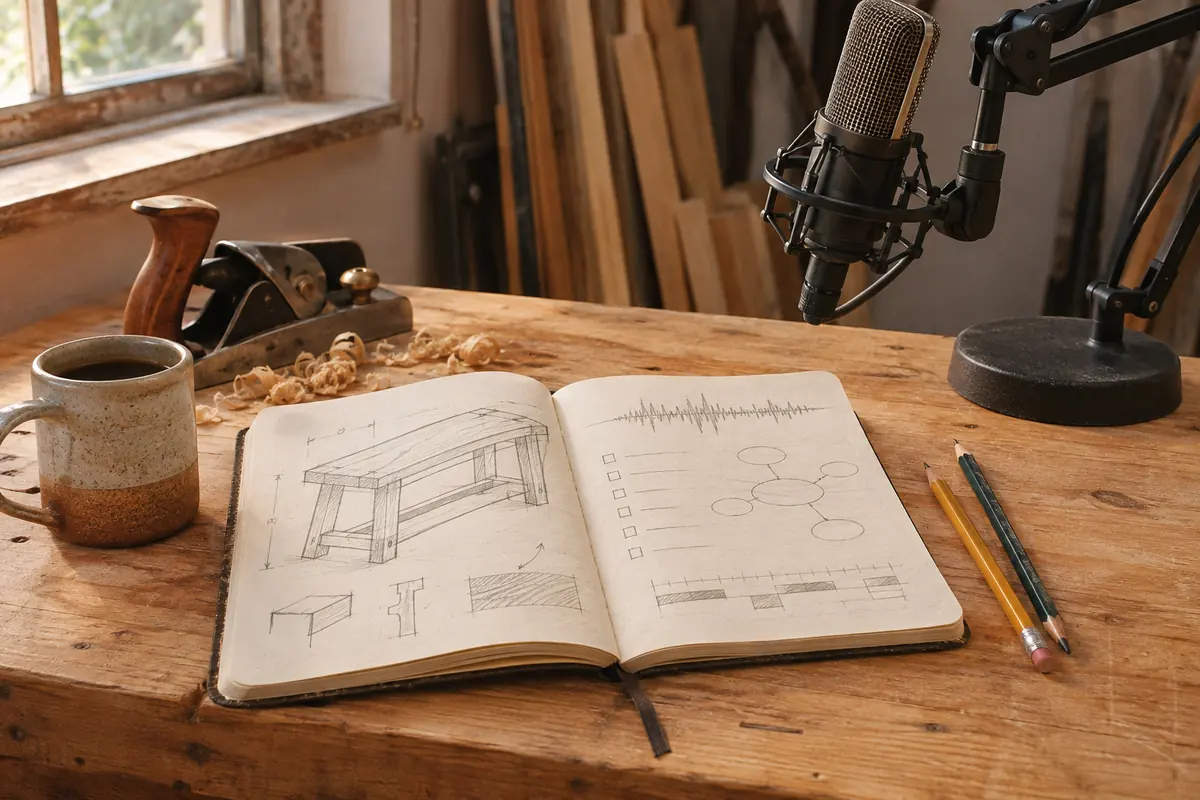
For a related part of the process, see Capturing Workshop Atmosphere for a Podcast.
Focus on decisions and evidence
A finished object may look good while concealing a difficult material choice or unexpected problem. Such decisions can offer valuable material for a programme.
Choose two or three moments where you changed the plan. Try not to judge the success of the decision solely by how easy it is to carry out. Some seemingly convenient choices require substantial reworking later, while a little preparation may eliminate a recurring difficulty. Consider the next person or the next stage that will depend on this result. Explain what observation caused each decision, not just what happened afterward. A useful way to decide is to imagine having to return to the work after several weeks. Leave enough context to make that return straightforward.
Distinguish explanation from instruction
A personal project account describes one approach under particular circumstances. It may not be suitable for every listener's tools, materials or level of experience.
Explain relevant constraints and avoid implying that the story is a complete tutorial. There are often several plausible ways to approach the same issue. The useful test is one that distinguishes their practical effects rather than comparing an ideal description of each method. Encourage appropriate instruction for unfamiliar practical operations. Keep the comparison honest by using similar starting conditions and avoiding a different standard for the favoured option. If the difference is too small to matter, consider keeping the simpler method for now. More demanding situations can provide additional evidence when they arise.
Record narration in a suitable space
Workshop machinery and handling noise can make explanations difficult to hear. A quiet later recording may preserve more useful detail than a running commentary during work.
A useful rule at this stage is to protect the part of the work that has already been established. Record the spoken story away from active operations using the project notes. This gives you a way to introduce changes without undoing earlier progress. Capture separate descriptive atmosphere only when it can be done safely. Keep details that explain the relationship between the current choice and preceding decisions, especially when a result depends on an earlier version. Think about how you would resolve an unexpected problem if it appeared the following day. A record of the relevant circumstances often saves repeated work.
Further reading in the journal: Planning the Order of a Woodworking Project.
Make supporting notes genuinely useful
Images, dimensions and relevant links can clarify points that were awkward to describe aloud. A transcript can help readers locate a particular decision.
Work through this part using a genuine example rather than a perfect demonstration. Prepare notes around the same central question as the recording. Consider whether the result remains clear if you have not looked at the surrounding notes for a while. Remove unrelated project photographs or incidental details that distract from that question. Anything requiring an explanation that exists only in your memory is worth clarifying before moving on. This does not call for a lengthy record of every minor action. Include the information needed to recreate important choices or explain why a result differs from what was originally expected.
Close with the actual outcome
An honest account may include an imperfect result or a remaining question. A manufactured success story weakens a useful practical discussion.
End by checking the deliverable against its intended use. Describe what worked, what remained uncertain and what you would test next. Allow for the fact that a small difference may be unimportant in one context and consequential in another. Keep the conclusion tied to the object and evidence discussed in the episode. A final review should establish what is actually known about the result and identify anything that needs a separate investigation. Do not assume that a successful example proves the same approach works for every possible situation. The evidence from this particular piece of work is sufficient for a sensible next decision.
Check the finished result
Describe the real outcome and the part of the plan you would revisit. Keep practical details in the accompanying notes and let the recording concentrate on the question that makes the project worth discussing.