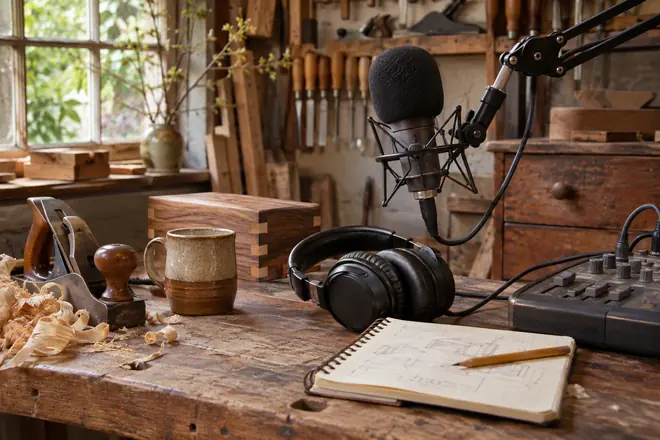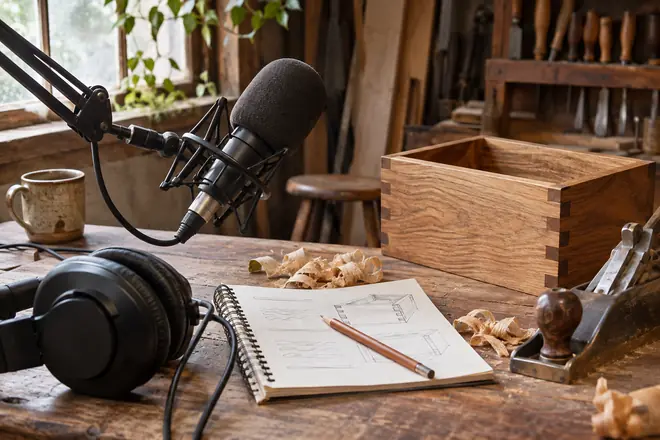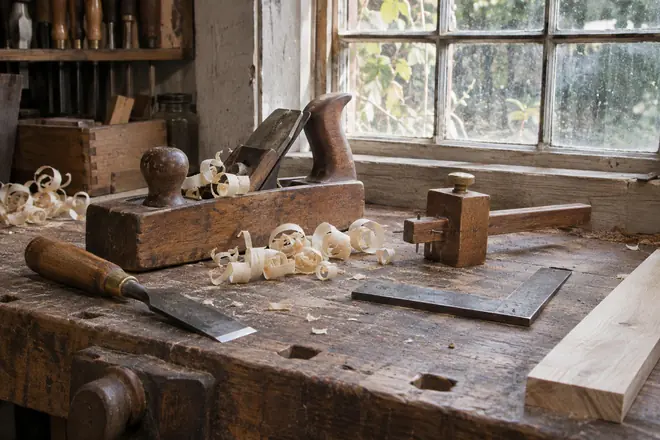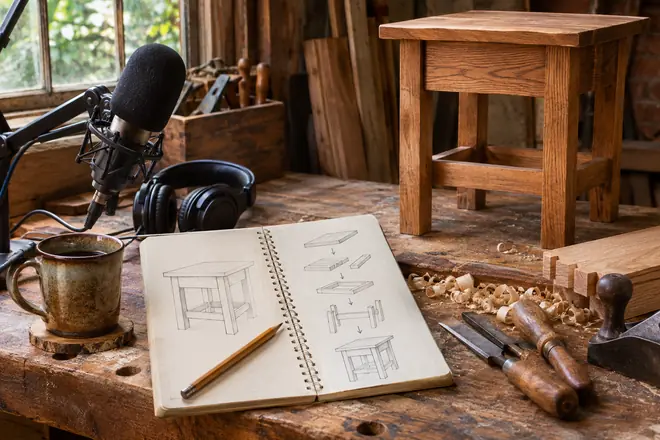
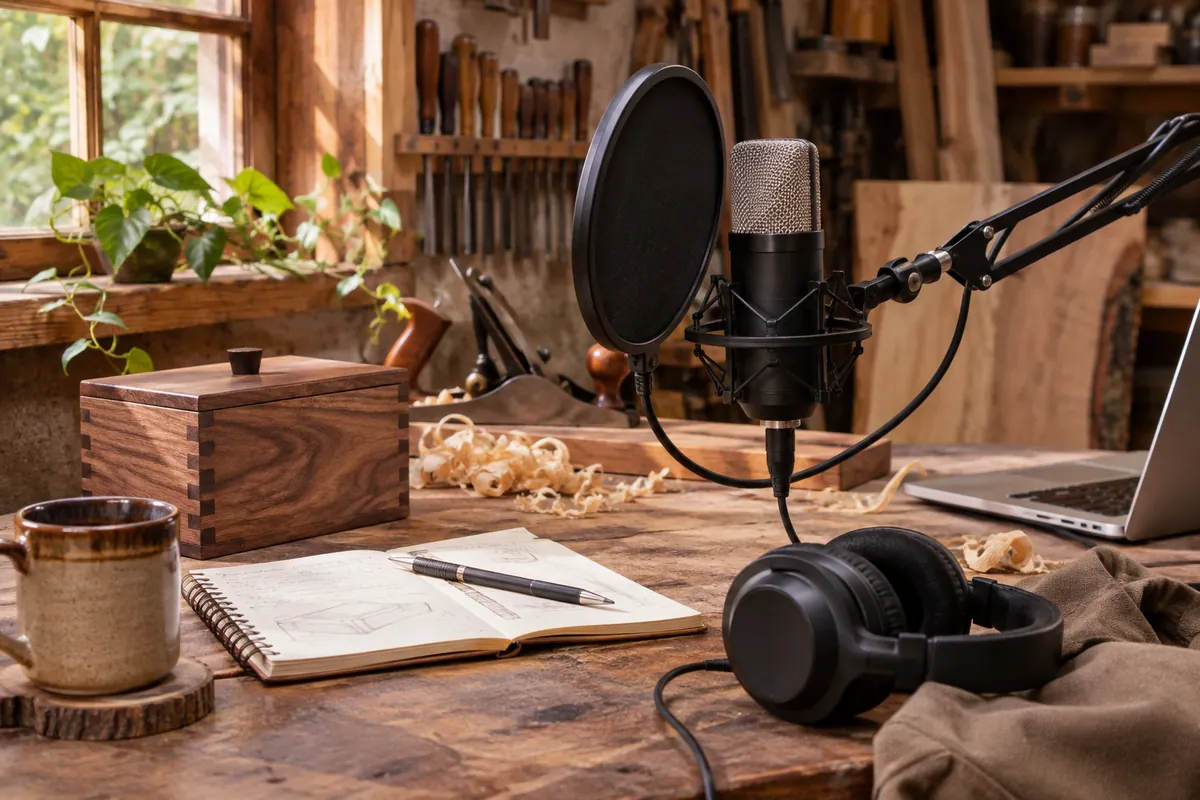
Woodworking involves many quiet choices that make excellent material for a conversation. A series can discuss a small project, a workshop routine or how a maker learned to recognize the limits of a particular approach. It need not feature famous guests or running commentary over noisy machinery. A practical first programme can be planned around something a listener can understand through description alone.
Choose a distinct corner of the craft
Woodworking covers a wide range of objects, methods and interests. A series that tries to explain the entire field may lack a clear identity.
Begin with something you can observe directly. Identify a subject you know or are prepared to investigate carefully. Keep the first attempt deliberately basic; otherwise it becomes difficult to separate a useful change from the effects of everything else that has changed at the same time. Make a short note of the starting conditions and retain it for the next attempt. Write several possible episodes that share the same underlying interest. If this is not apparent, reconsider the starting point instead of adding complexity. A workable baseline is often more informative than an elaborate arrangement made before the practical problem is understood.
Make the subject understandable without images
A listener cannot see a tabletop joint or the surface of a carving. Verbal description needs scale, material and purpose to establish what is being discussed.
Do the small preliminary exercise before getting absorbed in the larger task. Practise describing an object to someone who cannot see it. Think about what might make it fail outside this particular example, such as a change in the available time, the material or the person doing the work. Add only the details that help them understand the important point. Where the method is promising but the result remains inconsistent, simplify the arrangement or examine the source of the discrepancy. A method you understand well is generally easier to adapt than one that happens to work once.
Find stories within ordinary work
A craft programme does not require extraordinary finished pieces. Decisions about material, learning a technique and correcting a mistake offer useful discussion.
Pay careful attention to the reference used for the comparison. Choose a recent situation with a clear question or unexpected result. The original condition gives this exercise meaning; if it is lost, the result can become difficult to interpret. Work with a temporary copy or a small example wherever that is appropriate. Describe what happened and what you learned rather than inventing drama. Keep track of the differences that truly matter and distinguish them from incidental details. The point is to make a reliable choice, not to collect as many observations as possible without knowing how they affect the finished work.
Further reading in the journal: Capturing Workshop Atmosphere for a Podcast.
Keep recording separate from active tool use
Making an audio programme in a workshop should not interfere with safe work. Machinery and dust can also make dialogue difficult to record.
Use a suitable inactive area and make speech recordings away from active operations. Try not to judge the success of the decision solely by how easy it is to carry out. Some seemingly convenient choices require substantial reworking later, while a little preparation may eliminate a recurring difficulty. Consider the next person or the next stage that will depend on this result. If recording atmosphere, do so without distracting anyone from their work. A useful way to decide is to imagine having to return to the work after several weeks. Leave enough context to make that return straightforward.
Plan interviews around experience
A maker may have valuable knowledge without being accustomed to public speaking. Questions about specific work can be more comfortable than broad requests for expert advice.
Ask about an object, a decision or a change in the maker's technique. There are often several plausible ways to approach the same issue. The useful test is one that distinguishes their practical effects rather than comparing an ideal description of each method. Allow the guest time to explain unfamiliar terminology. Keep the comparison honest by using similar starting conditions and avoiding a different standard for the favoured option. If the difference is too small to matter, consider keeping the simpler method for now. More demanding situations can provide additional evidence when they arise.
Choose images that add context
A photograph of a completed object or quiet work space can help a reader understand the subject of an episode. The visual should support the actual material.
Select original or appropriately usable photographs with clear descriptive captions. Check whether any detail depends on an arrangement that will change later. It is common to discover that a useful intermediate result becomes inaccurate when the surrounding material is rearranged or another requirement changes. Avoid images that imply a person or project appeared in a recording when they did not. Make a final comparison after those dependencies are stable. In the meantime, leave a clear indication of what still needs to be confirmed. This is more useful than treating provisional work as finished and forgetting which assumptions require another check.
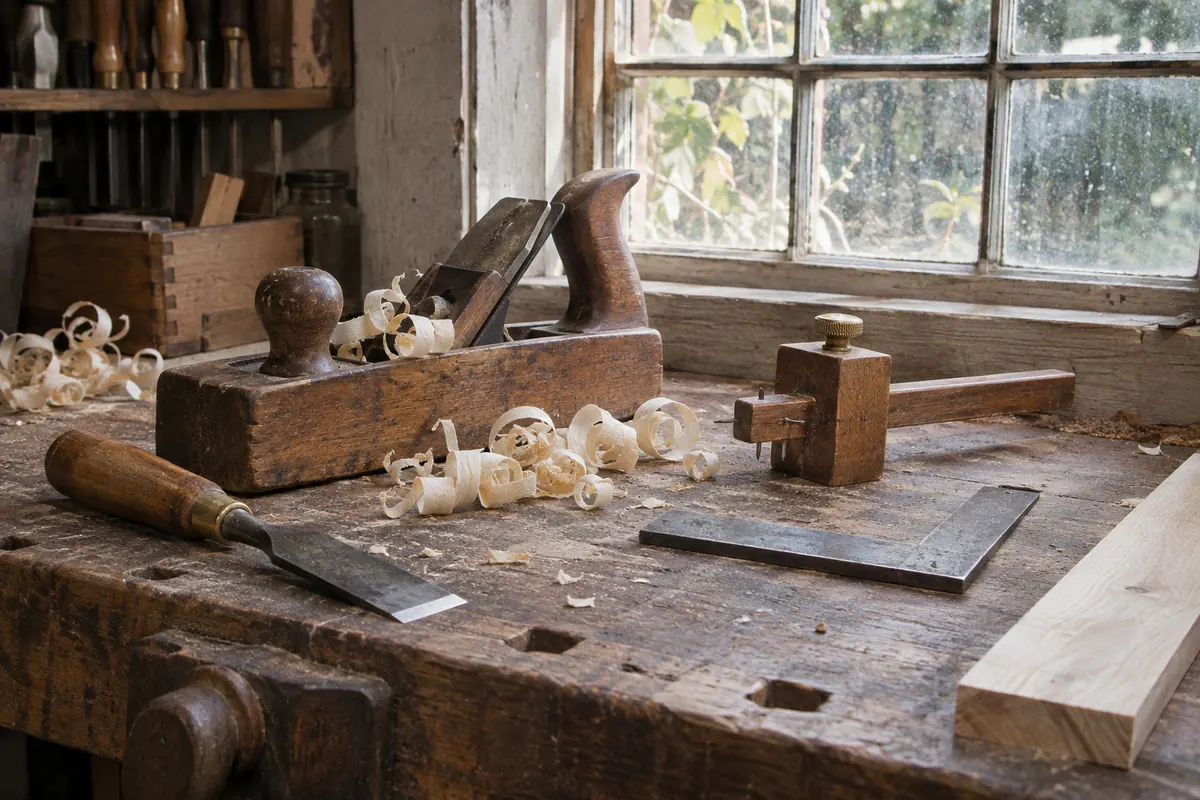
For a related part of the process, see Setting Up a Small Hand-Tool Woodworking Bench.
Build a practical release routine
An independent maker may have limited time for audio production alongside other work. A modest regular format is easier to maintain than a complex weekly schedule.
Estimate the effort for preparation, recording, editing and written notes. Consider how this result will appear to someone who did not take part in producing it. They will not have the same knowledge of discarded attempts, temporary adjustments and other circumstances. Decide a release pace based on the completed pilot. A brief independent check can reveal a problem that has become familiar enough for you to overlook. If the check suggests a substantial change, preserve the version you already have and make the correction deliberately. Avoid creating unrelated revisions while trying to resolve one recognizable difficulty.
Keep the archive useful
Over time, craft episodes become a collection of questions, observations and stories. Descriptive titles and related articles can help a reader rediscover useful material.
Before moving on, establish whether the method can be repeated without reconstructing every decision. Organize episodes around recognizable subjects and keep notes accurate. Make the remaining checks using the actual output rather than relying entirely on the appearance of the working version. Link related discussions when they address genuinely similar problems. If the work needs a further change, keep the reference that shows why. Otherwise, write down the useful choices and put them into practice during the next comparable task. This turns the effort of the first experiment into material that continues to be useful.
A final review
A good pilot leaves a few useful questions for the next episode. Keep the notes about how it was produced and build the recurring format around the work you can reasonably undertake.