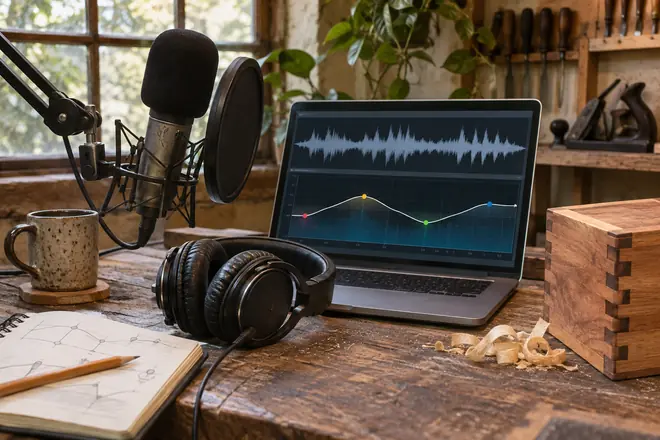
Changing the dynamics of a spoken programme is not simply a matter of making it louder. A listener who has to adjust playback constantly may appreciate greater consistency, while a voice flattened into an unchanging level loses expressive detail. Both recording technique and editing choices influence the problem. The best starting evidence comes from a stretch of real conversation containing quiet and emphatic speech.
Hear the dynamic issue
A conversation can contain soft explanations and emphatic responses. Compression changes the relationship between louder and quieter material; it does not repair clipping or noisy source audio.
Listen for phrases that require frequent adjustments to playback volume. There is an advantage to doing this before investing more time in the rest of the work. It exposes assumptions that can otherwise survive until the final stage, where they are more expensive or awkward to correct. Allow enough time to examine the result in the same circumstances where it will actually be used. Identify whether the problem comes from level changes, microphone distance or an edit. Keep the first version nearby so that a later change can be judged against it rather than against an imperfect memory.
Start with manual level balancing
A small correction to an unusually quiet segment can solve a problem without applying strong compression to the entire episode. Separate tracks make this easier.
Approach this stage as a series of small decisions rather than a single correction. Adjust conspicuous differences between passages before introducing dynamics processing. When working with more than one variable, change just the one most closely related to the issue you have noticed. A different position, arrangement or passage may introduce an unrelated effect that confuses the comparison. Check that the changes do not make the following word or speaker jump forward. Make a note of the details that had the clearest influence. This makes it possible to recreate a worthwhile change later without repeating all of the initial experimentation.
Understand threshold and ratio
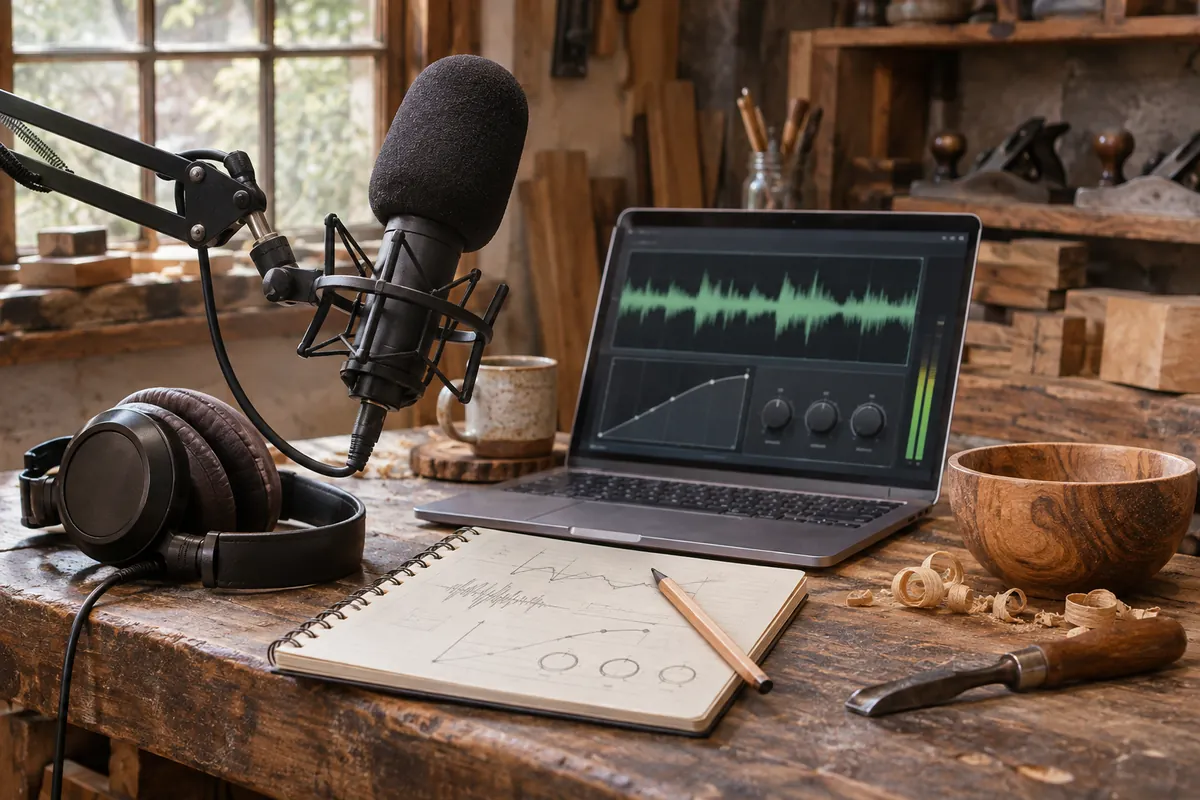
A compressor begins acting according to its threshold and reduces level changes according to its ratio. Results depend on the actual incoming signal rather than the numbers alone.
There is little benefit in spending a long time perfecting an example that cannot be used later. Watch the gain reduction while playing a representative passage. Think about the practical circumstances in which the result needs to work, and allow for their normal variation. Look for moderate action on stronger peaks instead of constant heavy reduction. A second attempt can be especially useful when the outcome was unexpectedly good or bad. It provides a chance to check whether the explanation fits the result. Do not be afraid to leave a less important detail alone when it is already satisfactory.

Further reading in the journal: The Basics of Equalizing a Podcast Voice.
Choose timing by listening
Attack and release influence what happens around the start and end of a loud sound. Poor timing may dull consonants or create audible pumping between words.
Test the proposed arrangement under conditions that are close to the finished task. Compare two settings using the same short dialogue passage. This is where an overlooked assumption often becomes visible. A satisfactory result with a very short or easy example does not necessarily reveal what happens when there are interruptions, changes of pace or several related details. Select the version that retains articulation and does not make background noise surge. If you discover a problem, note where it begins rather than treating everything around it as a failure. A local correction can preserve useful parts of the original approach.
Match playback volume during comparison
A louder signal can initially seem fuller or clearer simply because it is louder. Gain matching supports a more honest comparison.
Adjust the monitoring level until processed and original examples are similarly loud. One advantage of doing this carefully is that a later decision can be based on more than the impression left by the most recent attempt. Keep a concise record that identifies what was changed and what was observed. Listen for improved consistency, not merely increased intensity. It is particularly important not to attribute an improvement to the wrong cause when several things happened together. Try a controlled comparison if the explanation is uncertain; a short sensible check is usually less work than correcting a mistaken assumption throughout the project.
Leave room at export
A limit near the digital ceiling does not guarantee acceptable loudness, and lossy encoding can alter peaks. Use a sensible output margin and check the actual delivery file.
A useful rule at this stage is to protect the part of the work that has already been established. Measure the resulting audio and listen after exporting. This gives you a way to introduce changes without undoing earlier progress. Confirm that the recording is not harsh and that louder moments remain controlled. Keep details that explain the relationship between the current choice and preceding decisions, especially when a result depends on an earlier version. Think about how you would resolve an unexpected problem if it appeared the following day. A record of the relevant circumstances often saves repeated work.
There is a closer look at a related question in Recording a Podcast in a Noisy Workshop.
Respect the sound of the conversation
A highly flattened voice can feel tiring over time and may change the emotional character of an interview. Some natural variation is worth retaining.
Listen to a longer exchange rather than only a few seconds of processed speech. Consider how this result will appear to someone who did not take part in producing it. They will not have the same knowledge of discarded attempts, temporary adjustments and other circumstances. The voices ought to remain expressive and comfortable. A brief independent check can reveal a problem that has become familiar enough for you to overlook. If the check suggests a substantial change, preserve the version you already have and make the correction deliberately. Avoid creating unrelated revisions while trying to resolve one recognizable difficulty.
Write down the working approach
The best settings for one recording may not fit a different room, guest or microphone. A record of what was done is a starting point, not an instruction to repeat it.
Preserve the session and note the main reasons for each adjustment. Review the result as a whole instead of concentrating only on the most recent adjustment. This is a useful moment to distinguish essential checks from personal preferences that have little effect on the finished material. Use future tests to decide what should be changed or omitted. If an issue remains, describe it precisely enough to guide a later attempt. Keeping a concise record of the unresolved problem can be more helpful than continuing to make small changes without a clear expectation of what will improve.
Putting the method into practice
Listen to the exported file at a comfortable level rather than judging the result by the appearance of the gain-reduction display. The completed conversation should remain intelligible without losing its natural changes of emphasis.