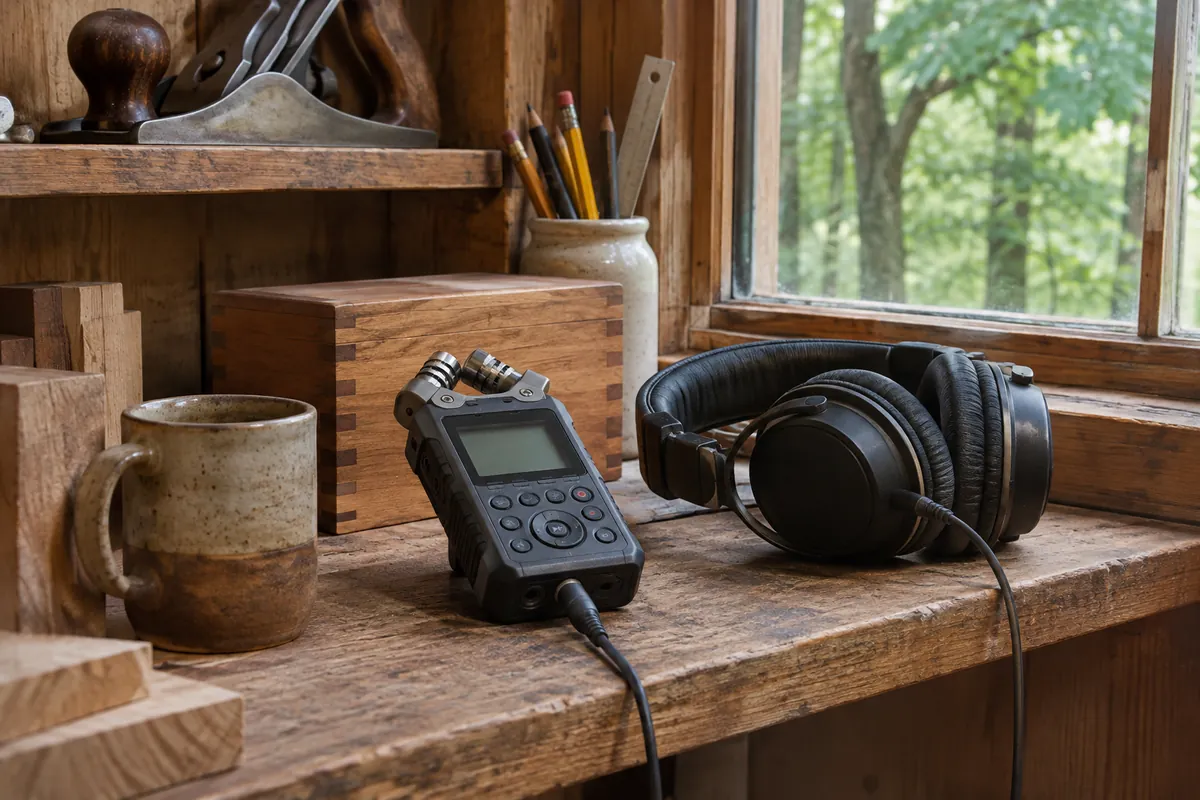
Taking a recorder to someone else's space introduces conditions that cannot all be predicted from the equipment list. There may be no convenient socket, a quiet room may be unavailable, and a microphone can collect wind that is barely noticeable to the people speaking. A dependable portable setup needs to be quick to test and comfortable enough to leave attention available for the interview.
Study the location first
Outdoor conditions and busy indoor spaces can change quickly. A sheltered position away from traffic often matters more than a different piece of equipment.
Visit or listen to the prospective site at the approximate recording time. There is an advantage to doing this before investing more time in the rest of the work. It exposes assumptions that can otherwise survive until the final stage, where they are more expensive or awkward to correct. Allow enough time to examine the result in the same circumstances where it will actually be used. Identify recurring noises and choose a backup location. Keep the first version nearby so that a later change can be judged against it rather than against an imperfect memory.
Watch for wind and movement
Air moving across a microphone can cause heavy rumble even when voices seem clear to someone standing nearby. Handling and footsteps also travel into recordings.
An informative comparison does not have to be complicated. Use a suitable wind cover and keep the microphone stable during a test. Keep the surrounding conditions as similar as practical and preserve the original material when you can. Allow a little time before judging the result, because a recent change sometimes seems more successful simply because it is different. Listen particularly to low-frequency bursts between syllables. If the improvement is uncertain, a second representative example may reveal whether the issue is really addressed. This is also a good opportunity to discover which details deserve to be retained in your notes.
Prepare a small kit
A complicated collection of accessories can slow setup and hide a missing essential item. A small, tested set of cables, headphones, power and storage is easier to manage.
There is little benefit in spending a long time perfecting an example that cannot be used later. Pack against a list based on the actual recorder and microphones. Think about the practical circumstances in which the result needs to work, and allow for their normal variation. Run the kit entirely from the power available at the location. A second attempt can be especially useful when the outcome was unexpectedly good or bad. It provides a chance to check whether the explanation fits the result. Do not be afraid to leave a less important detail alone when it is already satisfactory.
For a related part of the process, see Setting Recording Levels Without Clipping.
Monitor the surroundings
A guest may be distracted by headphones or uncomfortable in an exposed space. A producer still needs to detect noise and balance while remaining attentive to the interview.
Test the proposed arrangement under conditions that are close to the finished task. Find a position where the recorder is accessible without dominating the conversation. This is where an overlooked assumption often becomes visible. A satisfactory result with a very short or easy example does not necessarily reveal what happens when there are interruptions, changes of pace or several related details. Check that you can hear a fault and respond quietly. If you discover a problem, note where it begins rather than treating everything around it as a failure. A local correction can preserve useful parts of the original approach.
Ask about recording conditions
An interviewee needs to understand the purpose of the recording and how it may be used. Permission should be agreed before relying on the audio.
It is easy to become preoccupied with one detail while losing the original reason for addressing it. Discuss the recording arrangement, expected topics and intended publication in plain language. Remember to consider how the choice affects the finished material rather than merely the intermediate result. Clarify any boundaries or subjects the guest does not want recorded. Where two approaches appear equally suitable, think about the effort needed to maintain each of them. There may be an advantage to the simpler one if it leaves more room to deal with unpredictable problems. Preserve the comparison so you can revisit it if circumstances change.
Collect useful ambience
A short sound sample of a place can establish setting and cover certain edits. Capture it separately, without turning bystanders into recognizable subjects.
Try to separate the parts that require precise judgment from those that can reasonably vary. Record a modest stretch of ambient sound when the location permits it. This keeps attention available for the places where a small mistake has a significant consequence. Check for intelligible private conversation or other material that should not be included. If a detail does not affect the intended result but takes an unreasonable amount of time to refine, reconsider whether it deserves further attention. A reliable outcome does not require every intermediate choice to be identical. It does require a clear reason for the decisions that matter.
For more on a nearby subject, read How to Edit a Podcast Without Losing Its Character.
Identify files at once
Portable recording devices may create automatic filenames that are hard to recognize later. A short spoken slate helps locate the correct material.
State a brief non-sensitive episode reference and recording location at the start. Now compare the proposed solution with the actual needs of the finished work. A technically interesting alteration is not necessarily an editorial or practical improvement. Rename copies after the interview, preserving the original recording files. Evaluate the complete result, including the portions that were not changed, to make sure the choice did not create an unexpected difference elsewhere. If everything behaves as intended, stop adjusting it. The ability to decide that something is finished is an important part of a dependable independent workflow.
Verify before leaving
A lost or incomplete file may be impossible to recreate once a guest has departed. Checking the recordings is more valuable than packing quickly.
End by checking the deliverable against its intended use. Listen to a short portion of each track and confirm file length and backup copies. Allow for the fact that a small difference may be unimportant in one context and consequential in another. Write down any interruptions that need attention during editing. A final review should establish what is actually known about the result and identify anything that needs a separate investigation. Do not assume that a successful example proves the same approach works for every possible situation. The evidence from this particular piece of work is sufficient for a sensible next decision.
What to carry forward
A valuable field recording is not necessarily the one made at the originally proposed location. Keep the clean conversation as the priority, and retain a note explaining the origin of any separate location sounds.