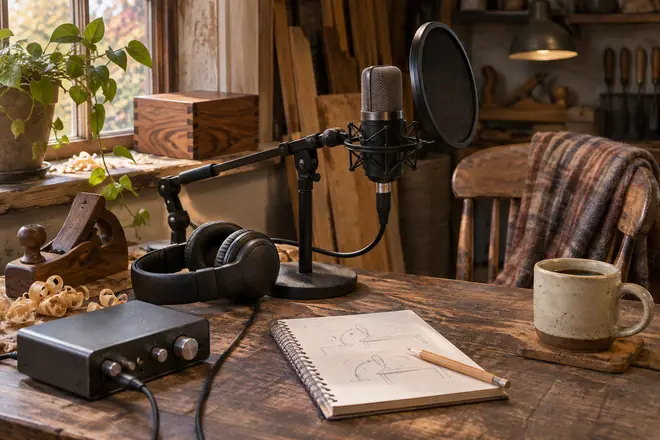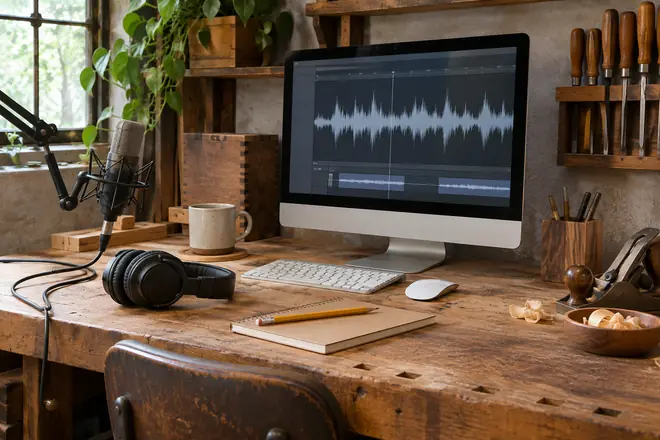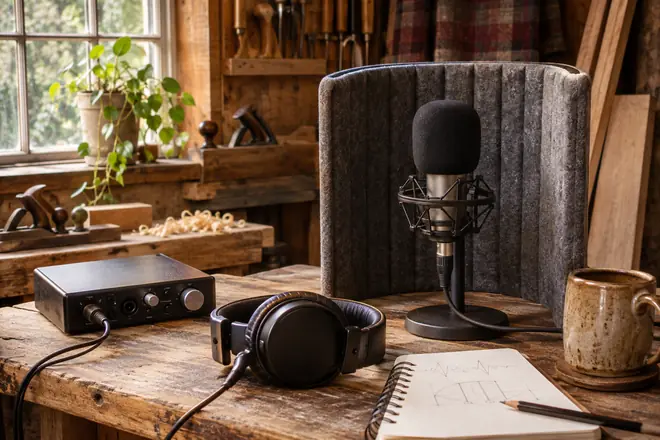
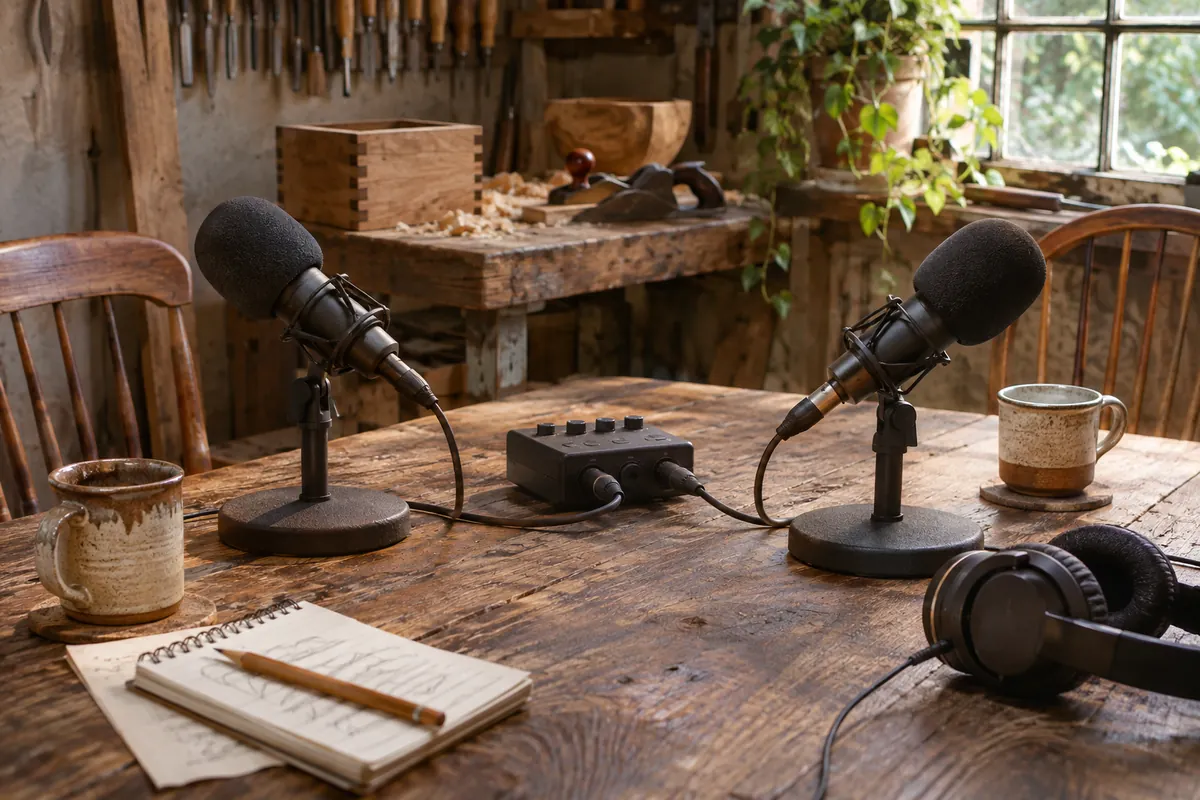
Two people sharing a table can hear each other perfectly well while the microphones collect an awkward mixture of voices and reflections. The physical arrangement needs to support a conversation and a recording at the same time. A few minutes of listening to the individual microphone signals before the first question can reveal the faults that are otherwise left for an editor.
Give each speaker a microphone
Sharing one close microphone makes distance and level difficult to maintain. Separate microphones let both people sit naturally and can create cleaner individual tracks.
For a useful first comparison, use an ordinary situation rather than an unusually favourable one. Arrange seats so that both speakers can see each other while staying near their microphones. The result should be representative of the work you normally intend to do, not a demonstration designed only to make the method look successful. Write down anything you are obliged to change during the trial, especially when a different person or material is involved. Ask each speaker to talk in turn and compare clarity. That observation gives you a starting measure for the remaining decisions, even if the initial attempt reveals a problem that needs another pass.
Record separate channels when possible
When all voices are combined into a single track, a loud laugh from one person cannot be adjusted without affecting the other. Separate tracks preserve more editing options.
Name and test the two recording inputs before beginning the interview. Use enough material to expose the ordinary variations you expect to encounter. A few seconds or a single particularly easy example can conceal a weakness that becomes obvious when attention moves elsewhere. When a change seems helpful, consider whether the same approach remains manageable under normal conditions. Play each recorded channel independently and verify which speaker it contains. A method that requires constant correction is unlikely to be a dependable part of a recurring routine. Prefer the arrangement that leaves you free to concentrate on the actual work.
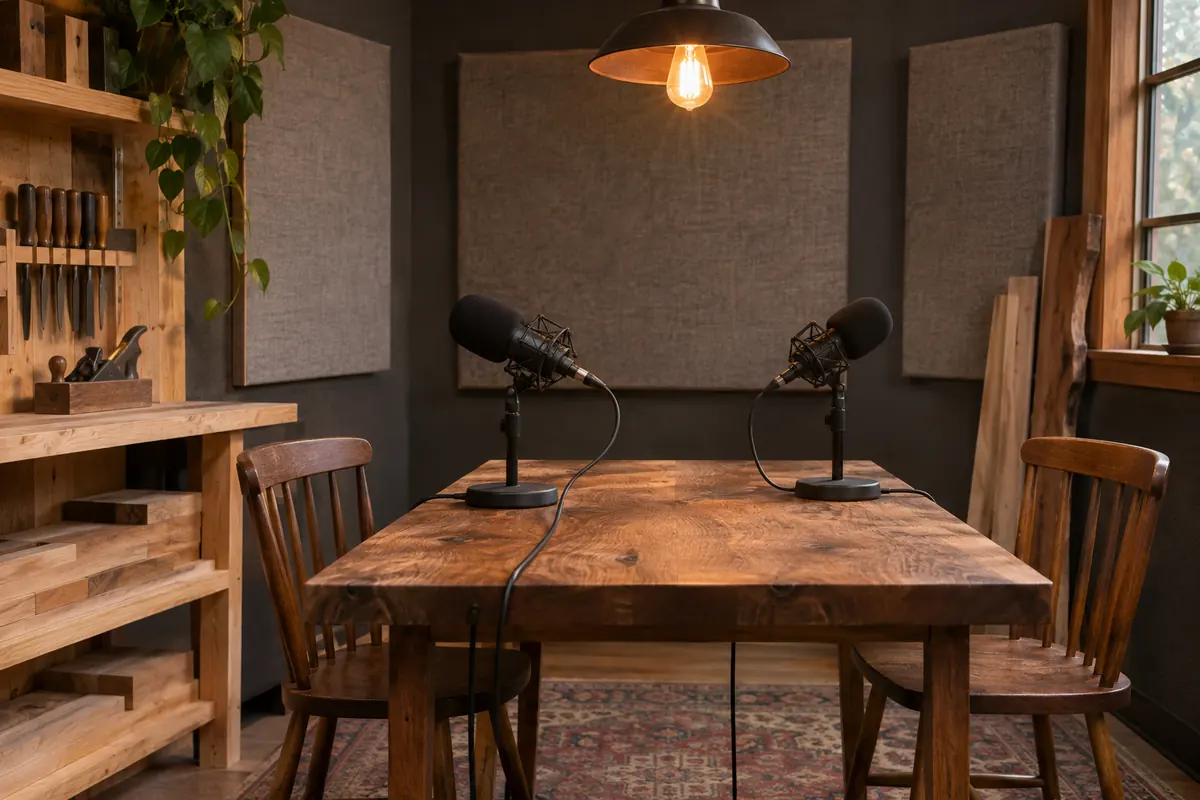
Arrange microphones to limit spill
Sound from one speaker reaches the other microphone at a delay, particularly in a reflective room. Distance and orientation can make each direct voice more prominent.
There is little benefit in spending a long time perfecting an example that cannot be used later. Place each microphone close enough to its own speaker and point away from the other where the pickup pattern permits. Think about the practical circumstances in which the result needs to work, and allow for their normal variation. Listen to the guest track while only the host is speaking. A second attempt can be especially useful when the outcome was unexpectedly good or bad. It provides a chance to check whether the explanation fits the result. Do not be afraid to leave a less important detail alone when it is already satisfactory.
For more on a nearby subject, read Where to Place a Microphone at Home.
Agree on conversation cues
Interruptions are natural but excessive overlap can obscure precisely the words a listener needs. A relaxed visual cue helps without imposing a rigid speaking order.
Discuss pauses and give the guest room to complete a response. Try not to judge the success of the decision solely by how easy it is to carry out. Some seemingly convenient choices require substantial reworking later, while a little preparation may eliminate a recurring difficulty. Consider the next person or the next stage that will depend on this result. During a short test, ensure neither speaker has to lean away to make eye contact. A useful way to decide is to imagine having to return to the work after several weeks. Leave enough context to make that return straightforward.
Use headphones thoughtfully
Monitoring can reveal distracting hum, cable movement or a microphone moving off position. Some guests find headphones awkward or tiring, so comfort matters.
It is easy to become preoccupied with one detail while losing the original reason for addressing it. Set listening levels to a comfortable volume and explain that changes need not affect the recorded level. Remember to consider how the choice affects the finished material rather than merely the intermediate result. Check that both people can hear the conversation normally. Where two approaches appear equally suitable, think about the effort needed to maintain each of them. There may be an advantage to the simpler one if it leaves more room to deal with unpredictable problems. Preserve the comparison so you can revisit it if circumstances change.
Create a reference for synchronization
Recordings made on independent devices may begin at different times or drift gradually. A common audible event provides a simple synchronization reference.
A useful rule at this stage is to protect the part of the work that has already been established. Capture a short clap or other distinct sound at the start, and optionally near the end. This gives you a way to introduce changes without undoing earlier progress. Verify that the waveform of the reference event appears on both tracks. Keep details that explain the relationship between the current choice and preceding decisions, especially when a result depends on an earlier version. Think about how you would resolve an unexpected problem if it appeared the following day. A record of the relevant circumstances often saves repeated work.
For a related part of the process, see How to Edit a Podcast Without Losing Its Character.
Handle long recordings carefully
Battery life, storage and interruptions become more important in a long interview. The test needs to confirm more than just thirty seconds of audio.
Work through this part using a genuine example rather than a perfect demonstration. Check available space and power before starting and note the expected duration. Consider whether the result remains clear if you have not looked at the surrounding notes for a while. Review indicators periodically without interrupting the speaker unnecessarily. Anything requiring an explanation that exists only in your memory is worth clarifying before moving on. This does not call for a lengthy record of every minor action. Include the information needed to recreate important choices or explain why a result differs from what was originally expected.
Audit the files before packing away
A recording that appeared to work may have a missing channel or corrupted file. Checking shortly afterwards preserves the opportunity to make a replacement recording.
Play part of the beginning and end of each file before leaving the room. The final comparison is an opportunity to see whether earlier expectations were reasonable. A satisfactory result may differ from the first idea in a way that reveals an important practical consideration. Save copies and confirm the expected duration for each track. Notice which arrangement was easier to maintain and which details deserved closer attention. Preserve only the notes and references that will be useful for future decisions. The next attempt can then begin with a better question instead of a completely new collection of guesses.
Before moving on
Separate recordings are helpful only when they survive the actual session. Before dismantling the table, open the recorded files and establish that the intended voices and the full conversation are present.