
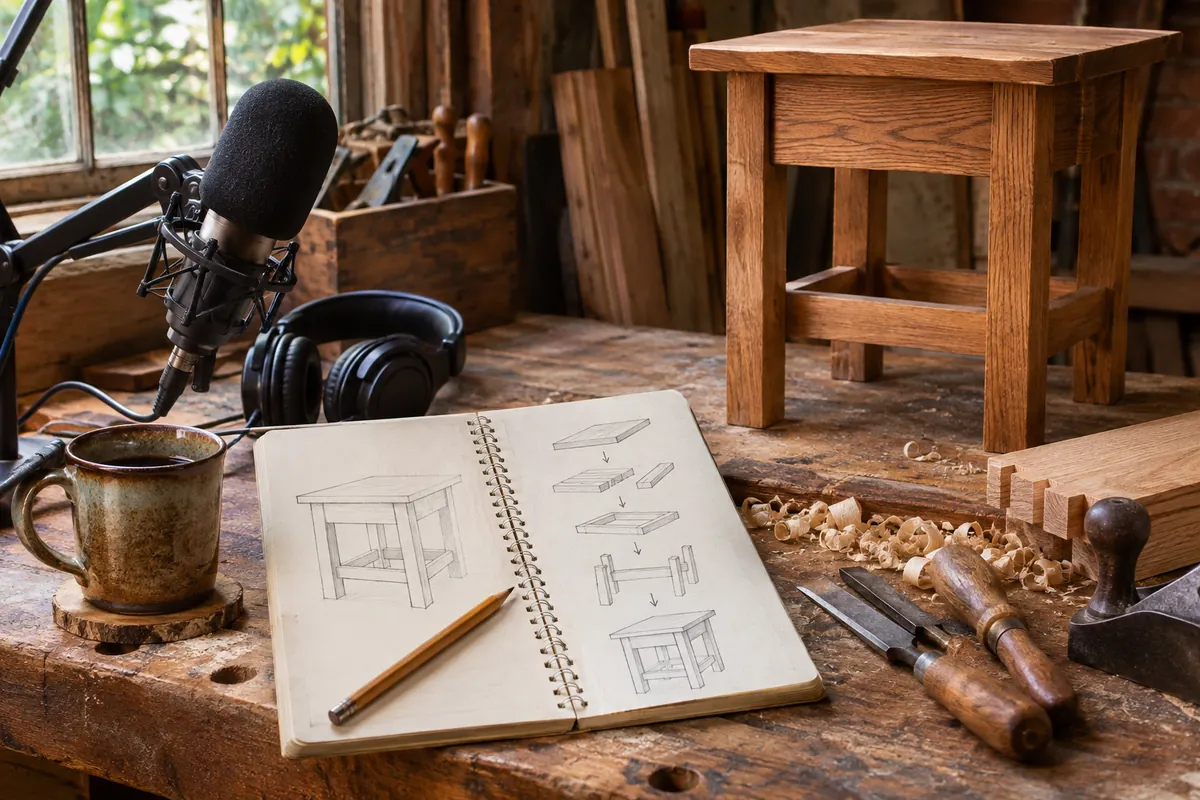
A drawing establishes what an object might look like, but it does not automatically tell a maker in what order to check and prepare its parts. The project plan needs to account for available stock, appropriate workholding, dependencies and places where a discrepancy can still be corrected. A small amount of planning can make later fitting and assembly more predictable.
Define the finished object
A sketch is most useful when it establishes overall dimensions and intended function. A picture without scale can lead to confusion later.
It is worth deciding what a satisfactory result would look like before proceeding. Draw the object and annotate the dimensions that matter to its use. A clear expectation makes it easier to recognize when a small alteration has done enough and another is unnecessary. Try not to confuse a conspicuous change with an actual improvement. Check that the planned size makes sense in the place it will occupy. If the outcome is difficult to assess, repeat the exercise with a simpler example and keep the two versions separate. The comparison is useful even when neither version is ready for final use.
Account for the material
A board may not provide the full usable dimensions implied by its rough size. Grain, defects and the intended orientation influence which parts can be cut from it.
Approach this stage as a series of small decisions rather than a single correction. Map the proposed pieces against the actual available stock. When working with more than one variable, change just the one most closely related to the issue you have noticed. A different position, arrangement or passage may introduce an unrelated effect that confuses the comparison. Avoid counting material affected by defects that make it unsuitable for the project. Make a note of the details that had the clearest influence. This makes it possible to recreate a worthwhile change later without repeating all of the initial experimentation.
Identify dependencies
Some operations rely on a reference surface, accurate dimensions or fitting another component first. A careless sequence can make a later task unnecessarily difficult.
Write a simple sequence based on the techniques you have been trained to use. Notice what happens at the boundaries of this task, not only in the part receiving your immediate attention. A change that looks correct on its own can affect the portion that precedes or follows it. Check both relationships before taking the work further. Note which measurements or checks need to happen before each stage. If you need to make a later correction, keep enough information to understand why the earlier choice was made. Clear records prevent confusion between a deliberate decision and an accidental difference that appeared halfway through.
For more on a nearby subject, read Keeping a Useful Woodworking Project Journal.
Choose tools and workholding
A plan should account for how a piece will be supported throughout each operation, not just the desired result. Unstable or awkward setups are reasons to revise the plan.
At this point, a representative example is more helpful than a vague impression about the work. Review the equipment required and appropriate methods before starting. Save any useful record of the exercise, including the original version where appropriate. Compare the results in their ordinary context instead of viewing each in isolation. Seek guidance for unfamiliar tools and omit operations you cannot carry out safely. If a small alteration causes a new problem nearby, consider reversing it and trying a more restrained approach. A careful comparison can be completed quickly once the question has been narrowed to something specific.
Plan fitting and adjustment
A small accumulated discrepancy can become obvious when several finished parts come together. Repeated measurement is more useful than hoping everything will fit eventually.
Before extending this change to everything else, see how it behaves in a small controlled example. Identify logical points for checking dimensions, flatness or fit. When possible, choose material that contains both ordinary features and the difficulty you are trying to address. This gives a more balanced impression of the result than selecting only the worst portion. Stop and investigate a discrepancy before proceeding with dependent work. A correction that improves one area but makes the normal material harder to use should be reconsidered. Adjust the scope instead of applying a broad solution merely for consistency.
Consider the surface treatment
Finishing may be affected by how closely parts fit and which areas remain accessible. The appropriate approach depends on the finish, material and intended use.
A useful rule at this stage is to protect the part of the work that has already been established. Plan the treatment and consult applicable instructions for the materials involved. This gives you a way to introduce changes without undoing earlier progress. Leave necessary time for preparation and drying under suitable conditions. Keep details that explain the relationship between the current choice and preceding decisions, especially when a result depends on an earlier version. Think about how you would resolve an unexpected problem if it appeared the following day. A record of the relevant circumstances often saves repeated work.
Further reading in the journal: Planning a DIY Podcast Episode Around a Project.
Keep the work area organized
Several similar parts can become difficult to distinguish once a project is underway. Labels and organized storage help preserve the intended orientation.
There is a difference between remembering a method and being able to repeat it under ordinary conditions. Mark components in a way appropriate for the material and keep small parts together. Record the details that proved necessary and resist turning every observation into a complicated procedure. Check labels and dimensions before using or assembling them. If something does not work predictably, identify the part of the arrangement that is most likely responsible and test it directly. Useful conventions develop from repeated work, and they need not be fixed forever. Change them when real examples show a reason to do so.
Record improvements after completion
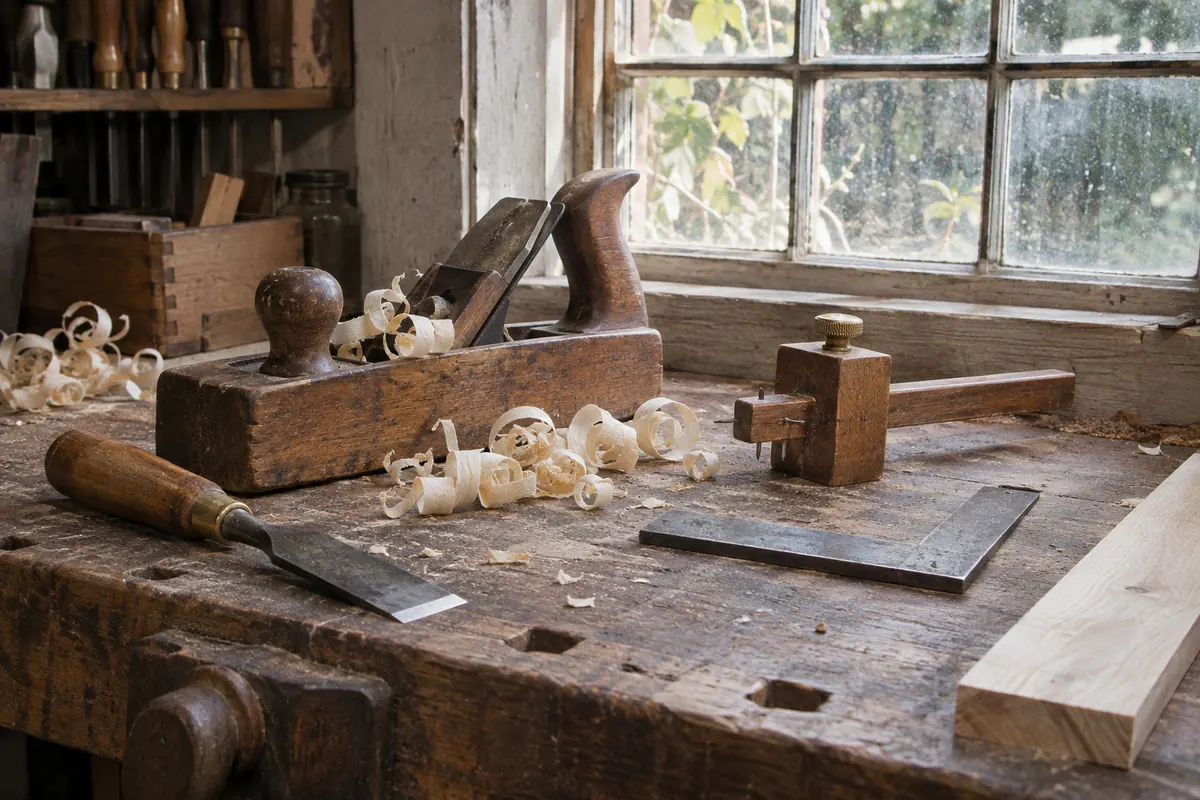
A finished project offers more useful information than the initial sketch alone. Unexpected difficulties often reveal a better sequence or simpler design.
End by checking the deliverable against its intended use. Write down which stages required rework and why. Allow for the fact that a small difference may be unimportant in one context and consequential in another. Use the observations when planning a comparable project rather than repeating the same assumptions. A final review should establish what is actually known about the result and identify anything that needs a separate investigation. Do not assume that a successful example proves the same approach works for every possible situation. The evidence from this particular piece of work is sufficient for a sensible next decision.
A final review
Review the sequence after the work and distinguish a useful planned check from a correction you discovered along the way. The next project is the place to test any improvement.