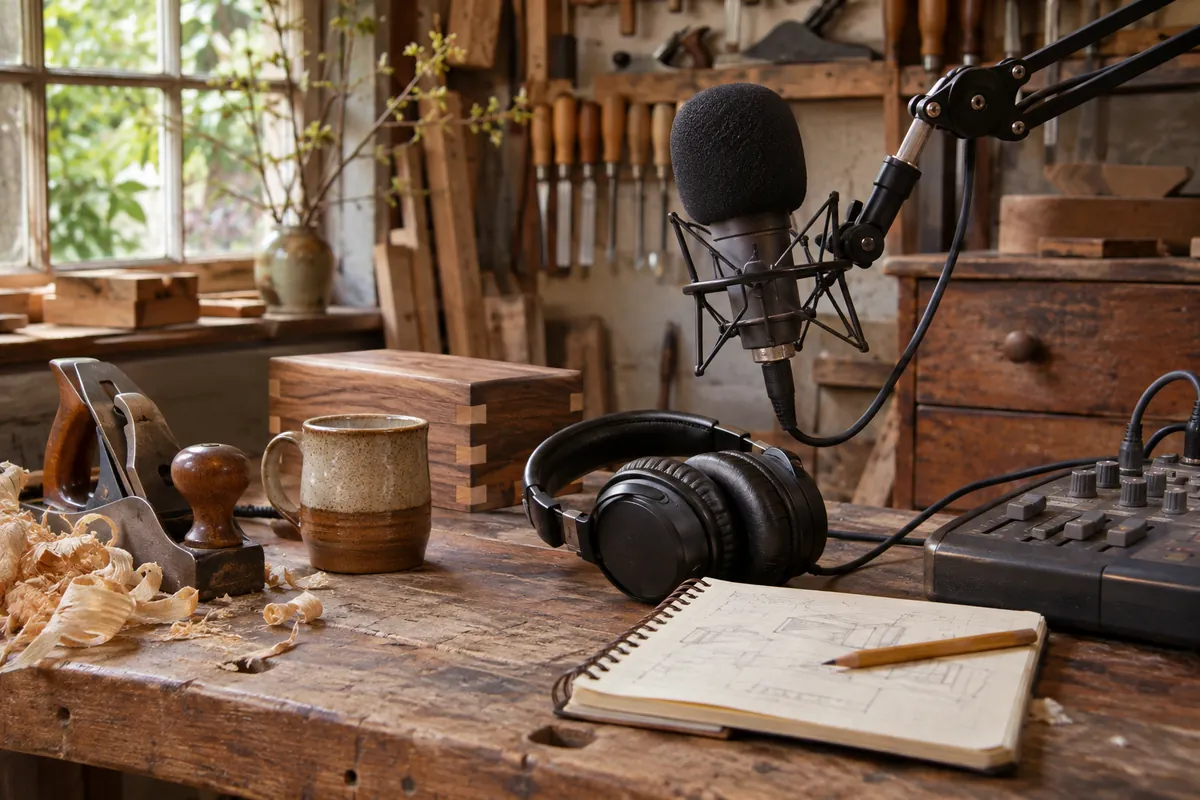
A short sound from a workshop can establish a place before a voice enters. That same sound played continuously beneath an interview may become an obstacle to listening. Separate atmosphere recordings let an editor decide which moments benefit from a recognizable location without committing every spoken sentence to its background noise.
Ask what the ambience contributes
An audio scene can suggest a place, but constant sound beneath an explanation may merely distract. The material needs a clear role in the episode.
It is worth deciding what a satisfactory result would look like before proceeding. Identify the particular transition or scene where atmosphere would be useful. A clear expectation makes it easier to recognize when a small alteration has done enough and another is unnecessary. Try not to confuse a conspicuous change with an actual improvement. Select sounds that establish that setting without drowning out the spoken content. If the outcome is difficult to assess, repeat the exercise with a simpler example and keep the two versions separate. The comparison is useful even when neither version is ready for final use.
Record separate clean samples
Dialogue and location sound combined on the same track are difficult to balance independently. Separate samples provide more editing control.
An informative comparison does not have to be complicated. Capture a short stretch of steady atmosphere away from the voice recording when appropriate. Keep the surrounding conditions as similar as practical and preserve the original material when you can. Allow a little time before judging the result, because a recent change sometimes seems more successful simply because it is different. Listen for unexpected conversations or other material that should not be published. If the improvement is uncertain, a second representative example may reveal whether the issue is really addressed. This is also a good opportunity to discover which details deserve to be retained in your notes.
Choose realistic recording positions
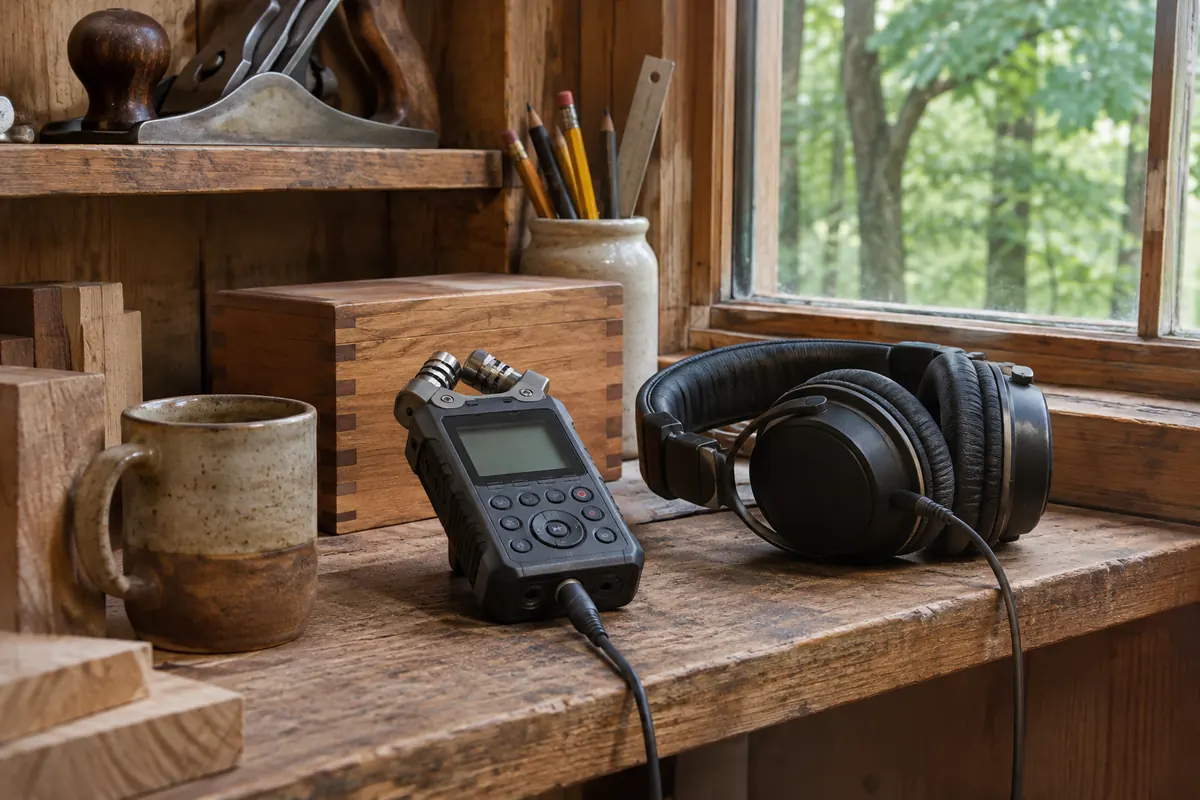
A microphone placed immediately next to a sound source may create a different impression from the experience of standing in the room. Distance influences both intensity and perspective.
There is little benefit in spending a long time perfecting an example that cannot be used later. Make two short tests from sensible safe positions. Think about the practical circumstances in which the result needs to work, and allow for their normal variation. Compare which one best establishes the intended setting. A second attempt can be especially useful when the outcome was unexpectedly good or bad. It provides a chance to check whether the explanation fits the result. Do not be afraid to leave a less important detail alone when it is already satisfactory.
Further reading in the journal: Planning a DIY Podcast Episode Around a Project.
Respect safety and privacy
A busy workshop is not a recording studio. Audio gear should never obstruct people, machinery, personal protective equipment or ordinary movement.
At this point, a representative example is more helpful than a vague impression about the work. Agree where and when recording may take place and keep equipment clear of active work. Save any useful record of the exercise, including the original version where appropriate. Compare the results in their ordinary context instead of viewing each in isolation. Do not make equipment operation part of the recording unless it can be handled appropriately and safely. If a small alteration causes a new problem nearby, consider reversing it and trying a more restrained approach. A careful comparison can be completed quickly once the question has been narrowed to something specific.
Capture sound with headroom
An unexpected loud noise may overload a recording even when the background is quiet. Atmosphere often includes abrupt changes in level.
Set levels while monitoring a representative safe recording condition. There are often several plausible ways to approach the same issue. The useful test is one that distinguishes their practical effects rather than comparing an ideal description of each method. Check that the resulting audio remains clean when louder moments occur. Keep the comparison honest by using similar starting conditions and avoiding a different standard for the favoured option. If the difference is too small to matter, consider keeping the simpler method for now. More demanding situations can provide additional evidence when they arise.
Build a natural transition
A brief opening atmosphere followed by close dialogue can convey place without masking the presenter. A sudden cut may be effective or distracting depending on context.
Try a short transition on a copy of the episode and listen to the complete sequence. Check whether any detail depends on an arrangement that will change later. It is common to discover that a useful intermediate result becomes inaccurate when the surrounding material is rearranged or another requirement changes. Adjust timing and level so the change feels intentional. Make a final comparison after those dependencies are stable. In the meantime, leave a clear indication of what still needs to be confirmed. This is more useful than treating provisional work as finished and forgetting which assumptions require another check.
Further reading in the journal: Getting Started with Green Woodworking.
Avoid excessive processing
Heavy effects can make authentic location sound feel artificial or obscure the clues that identify the space. Correct only distracting faults that can be addressed cleanly.
Compare the original with a lightly cleaned version at similar playback levels. Consider how this result will appear to someone who did not take part in producing it. They will not have the same knowledge of discarded attempts, temporary adjustments and other circumstances. Retain the character of the room where it serves the narrative. A brief independent check can reveal a problem that has become familiar enough for you to overlook. If the check suggests a substantial change, preserve the version you already have and make the correction deliberately. Avoid creating unrelated revisions while trying to resolve one recognizable difficulty.
Archive the samples with context
A vague recording name is difficult to interpret later. A note about the place, date, recording conditions and usable material helps prevent inappropriate reuse.
Label the source files and preserve required permission information. The final comparison is an opportunity to see whether earlier expectations were reasonable. A satisfactory result may differ from the first idea in a way that reveals an important practical consideration. Use the samples only in contexts compatible with the recording and its agreed purpose. Notice which arrangement was easier to maintain and which details deserved closer attention. Preserve only the notes and references that will be useful for future decisions. The next attempt can then begin with a better question instead of a completely new collection of guesses.
Check the finished result
Compare the finished opening with a version containing only dialogue. Keep the location sound where it adds meaningful context, and preserve the separate source with a clear description of its recording conditions.
When the scene changes, compare the background level at the join. A short transition matched to the actual room can sound more convincing than a long unrelated sound bed.